Podiatrists, beauticians
Corn Removal: Which Podiatry Burr, Which Technique?
Corn removal with a podiatry burr: which nail drill bit for callus and hyperkeratosis? Technique, speed and indications with carbide burrs explained for professional podiatrists.
June 17, 2026
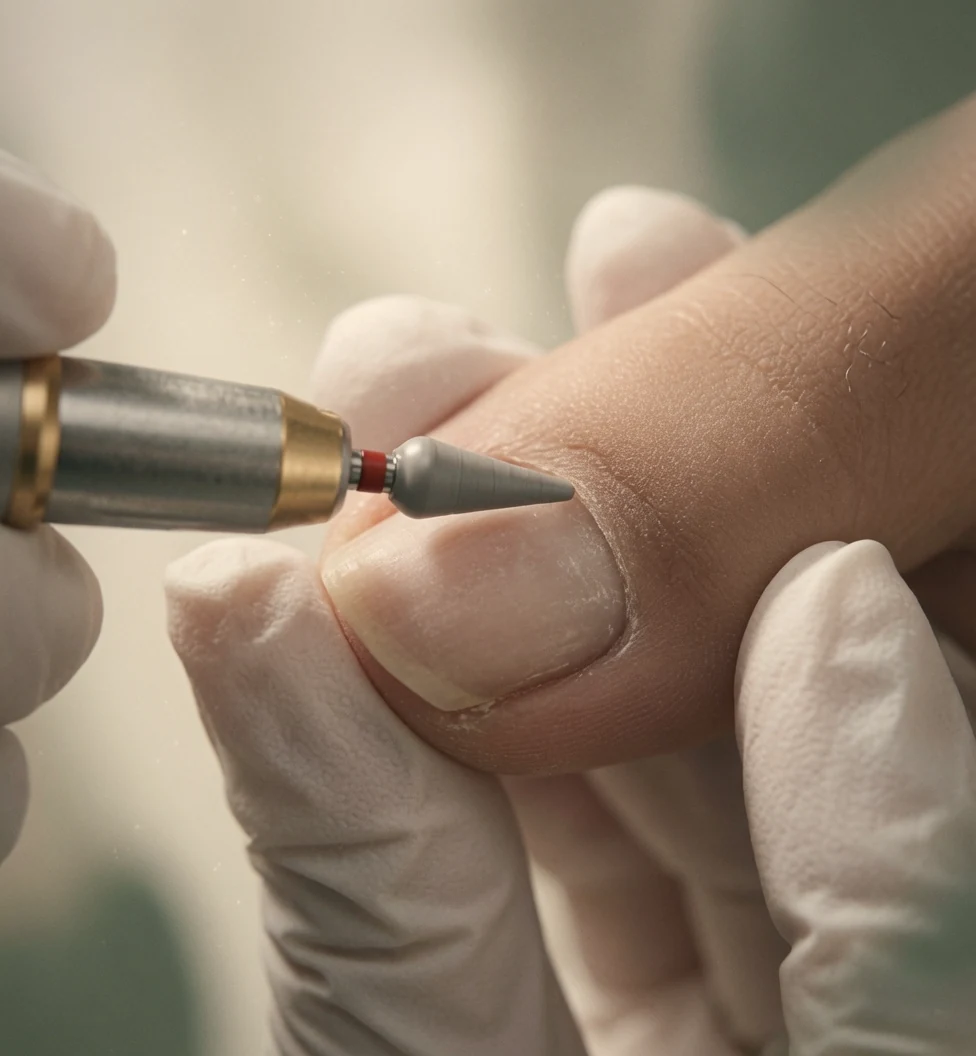
The corn (medically: clavus or heloma) is one of the most common diagnoses in podiatric practice. Despite its frequency, treatment demands precision: the wrong burr, incorrect speed, or over-deep reduction can injure surrounding tissue, cause pain, and delay healing. This guide explains which burr type is suitable for clavus treatment, what the technique involves, and what to consider when selecting equipment.
What is a Corn — and What is Not?
A clavus is a localised hyperkeratosis with a central nucleus that grows perpendicularly into the dermis and causes pain by pressing on nerve endings. It develops at typical pressure points: the little toe ball (heloma durum), between the toes (heloma molle, softened by maceration), and beneath nails (subungual clavus).
Distinguishing from a callus:
- Callus: diffuse, flat hyperkeratosis without a nucleus — remove flatly with carbide burr or abrasive sleeves
- Clavus: point/cone-shaped with a nucleus — precise, deeper reduction required; caution regarding depth
For subungual clavus, unclear diagnosis, diabetic foot, or suspicion of papilloma (HPV): podiatric diagnosis and physician consultation before any treatment.
Burr Selection for Corn Treatment
Carbide Burr (Hard Metal) — Primary Indication
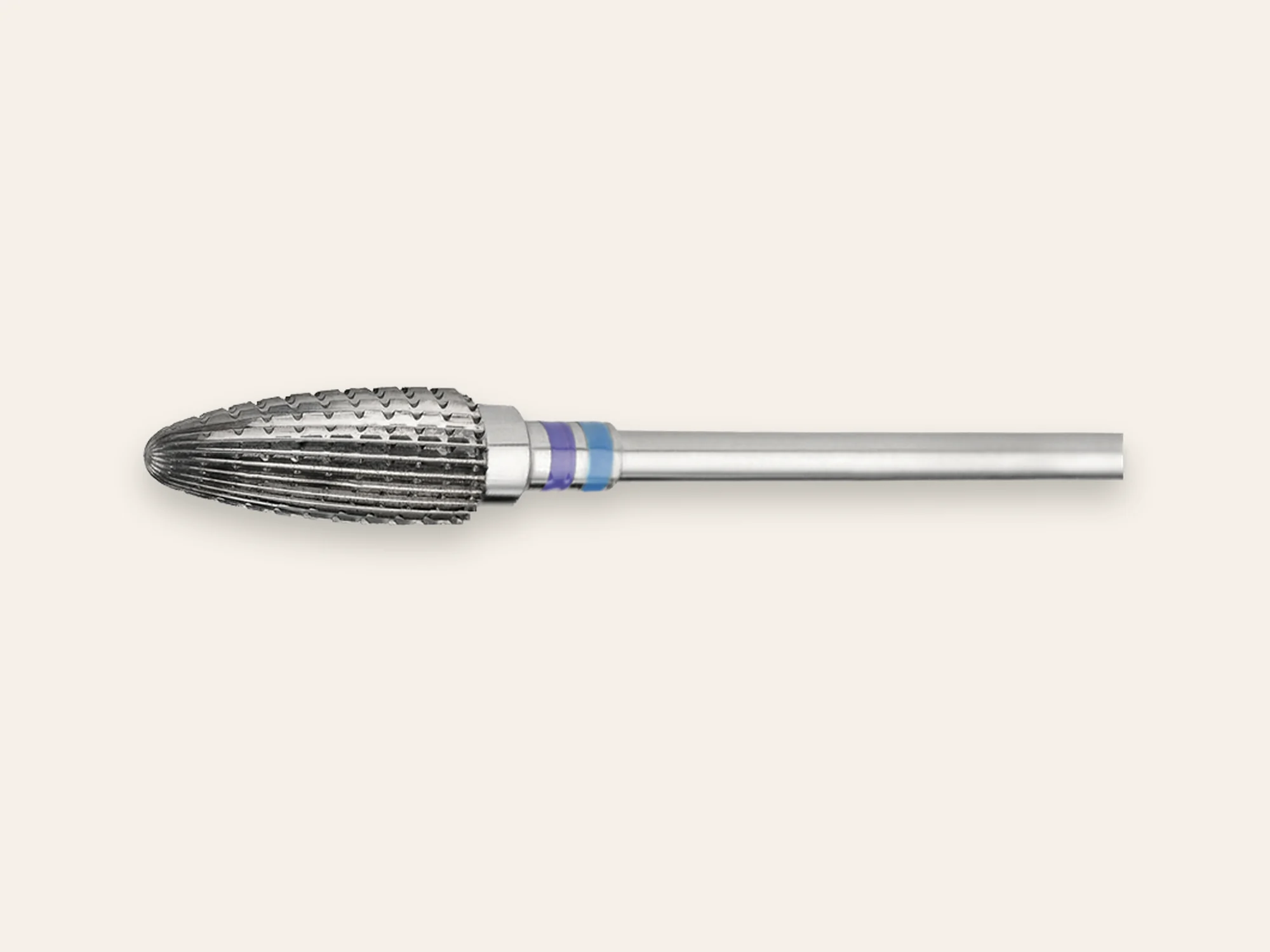
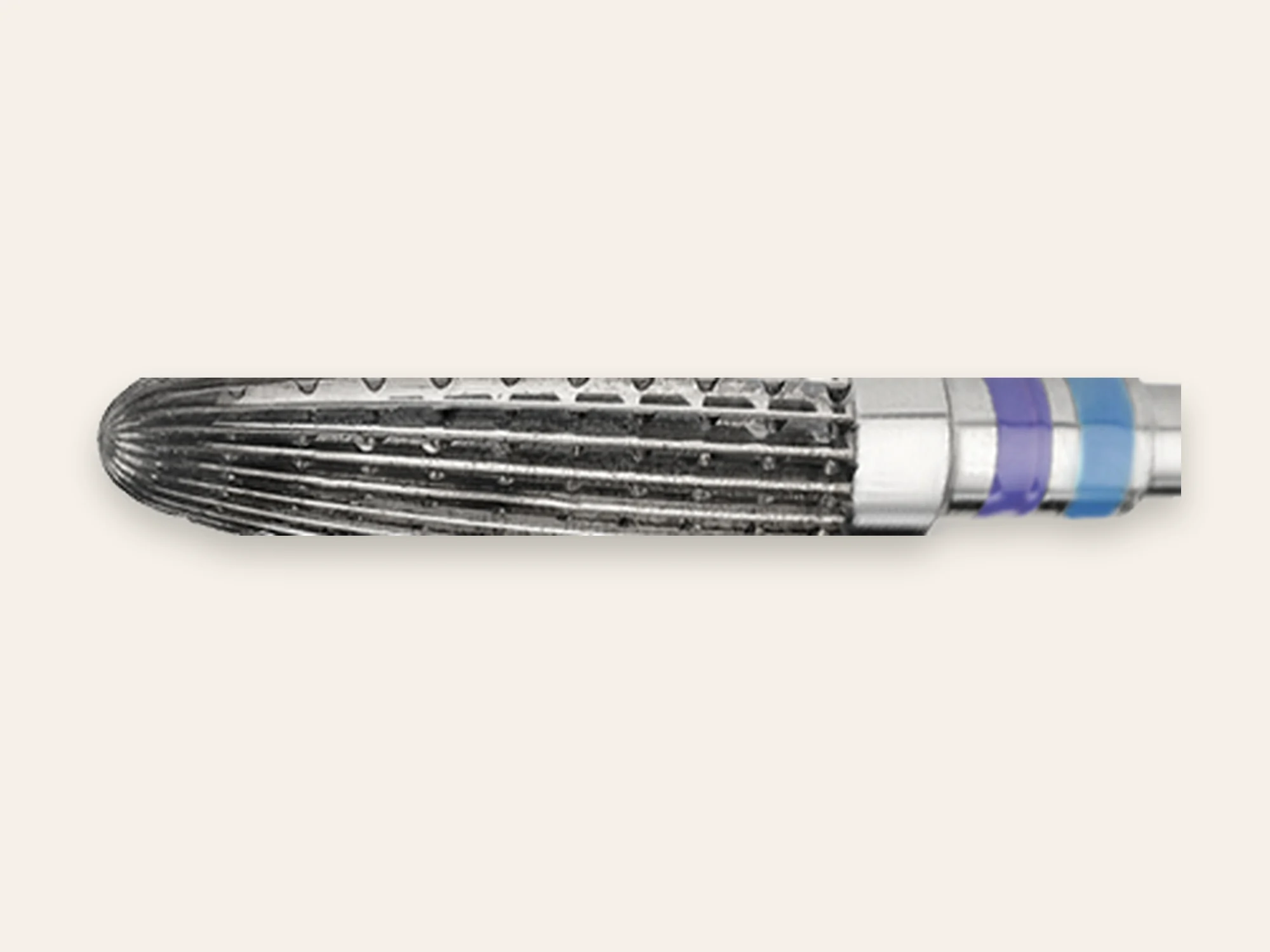
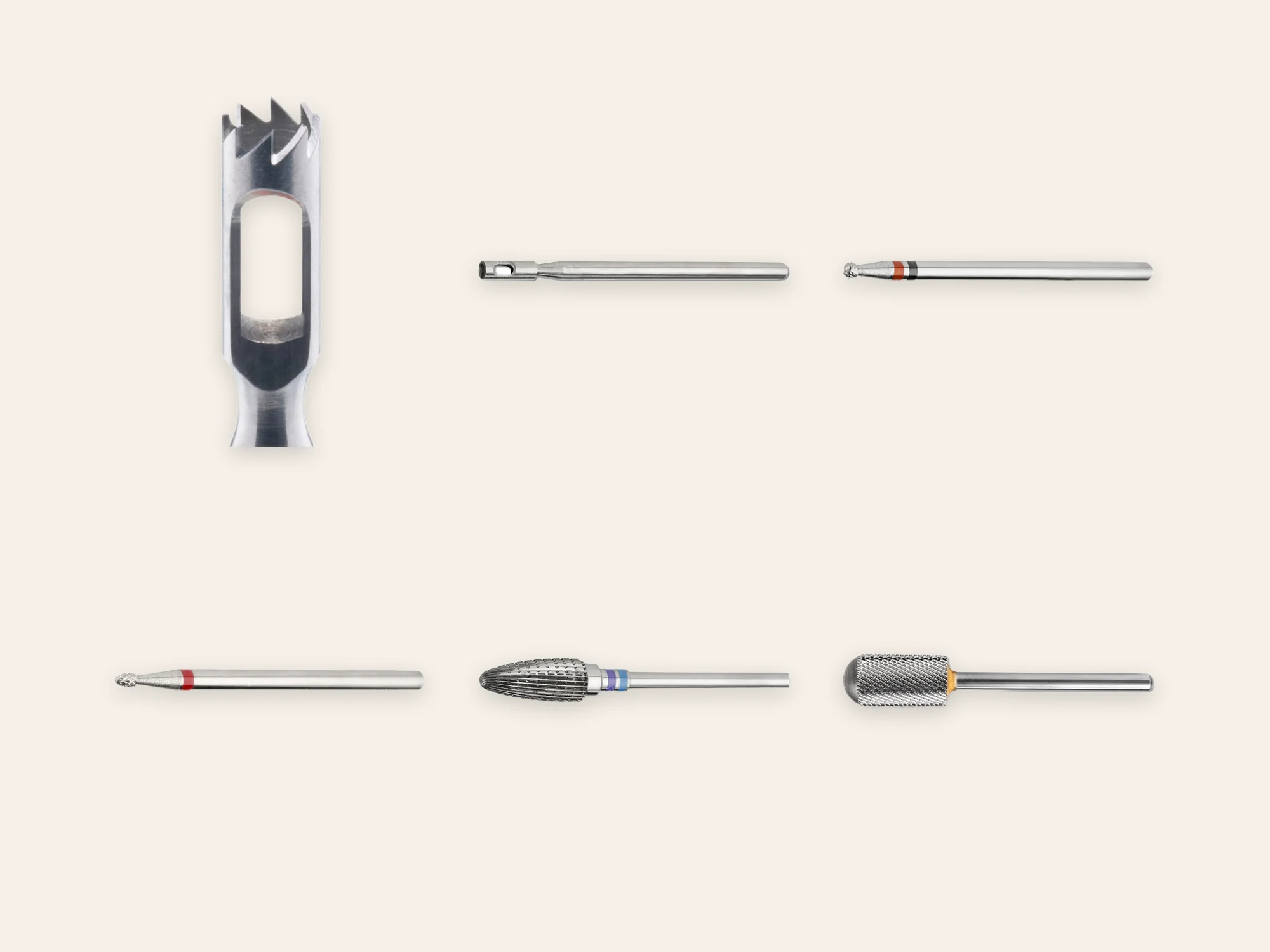
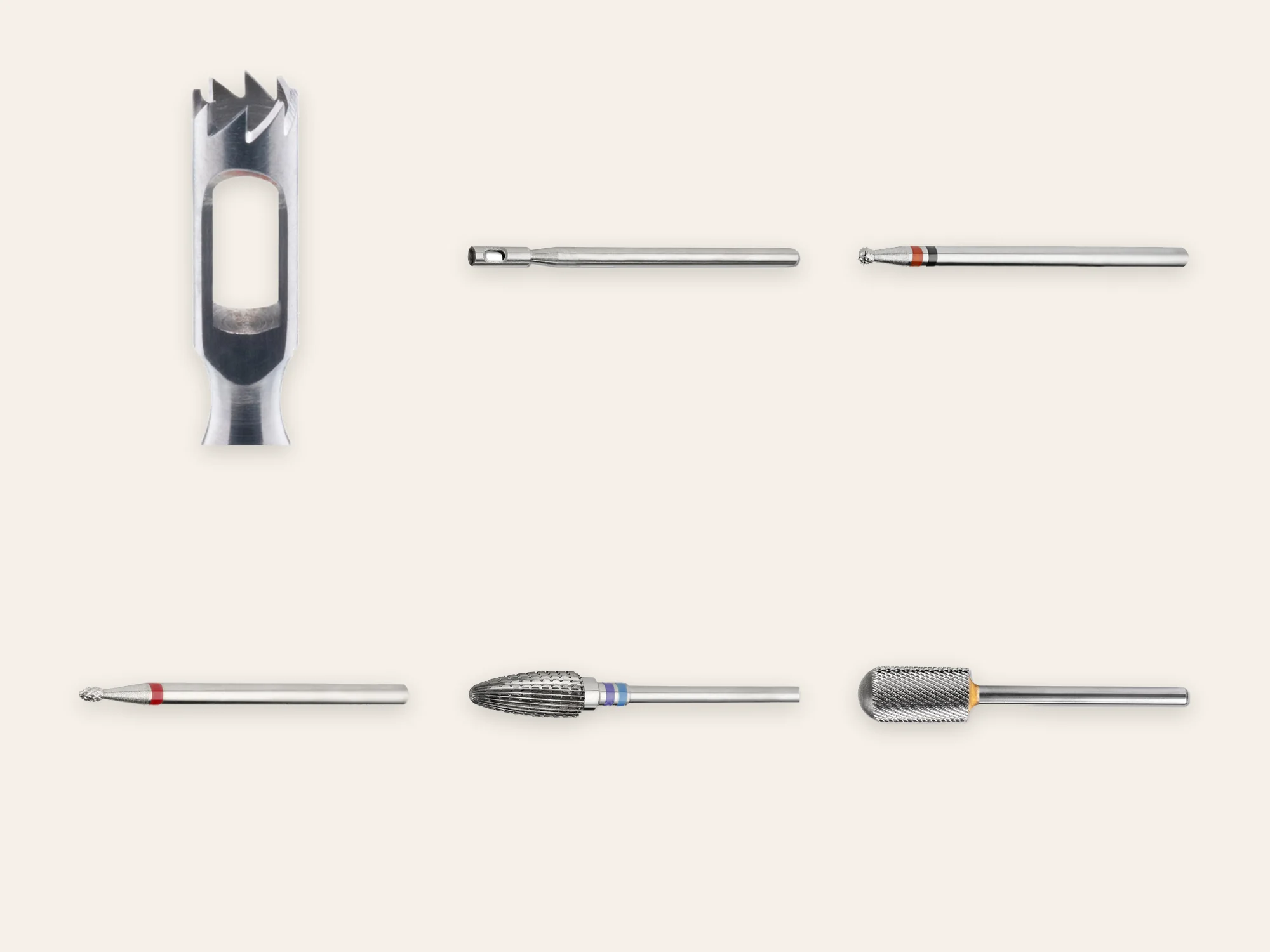
For podiatric corn treatment, carbide burrs are the workhorse. Their cutting flutes (6–8 cutting edges) remove callus in a controlled manner without heat transfer — a decisive advantage, since the clavus nucleus lies very close to sensitive tissue layers.
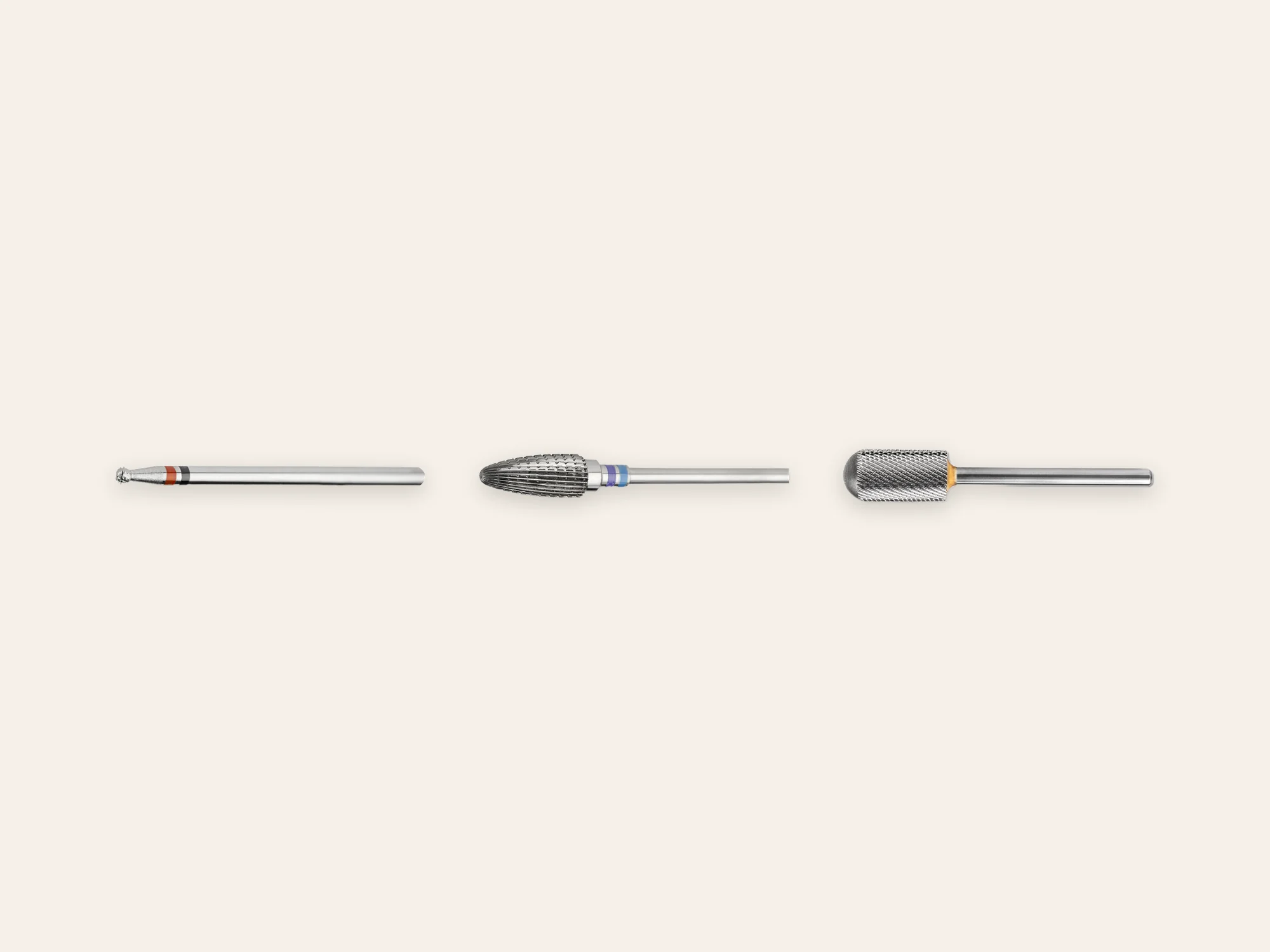
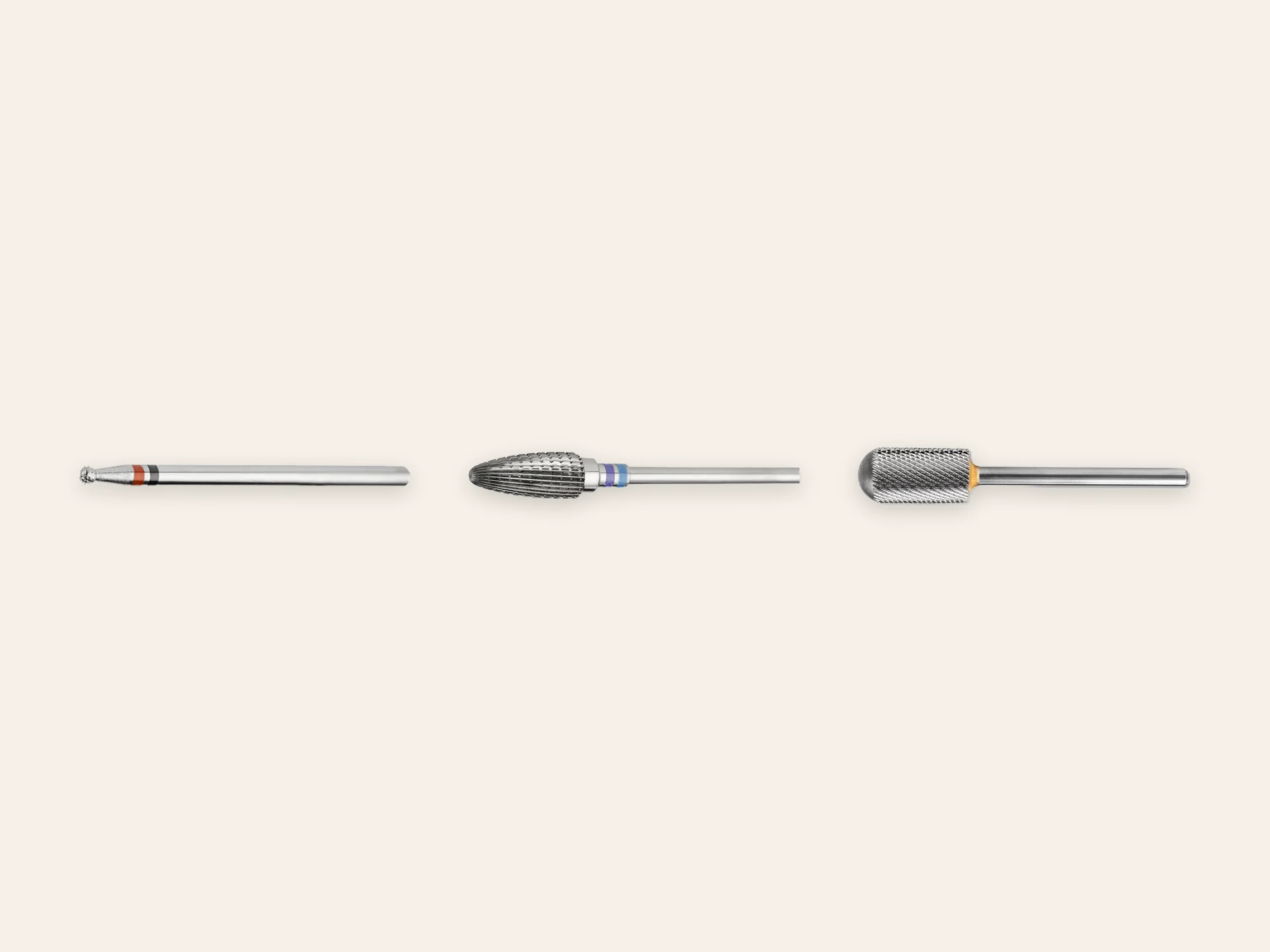
Recommended head shapes for corn removal:
| Head shape | Application | Product |
|---|---|---|
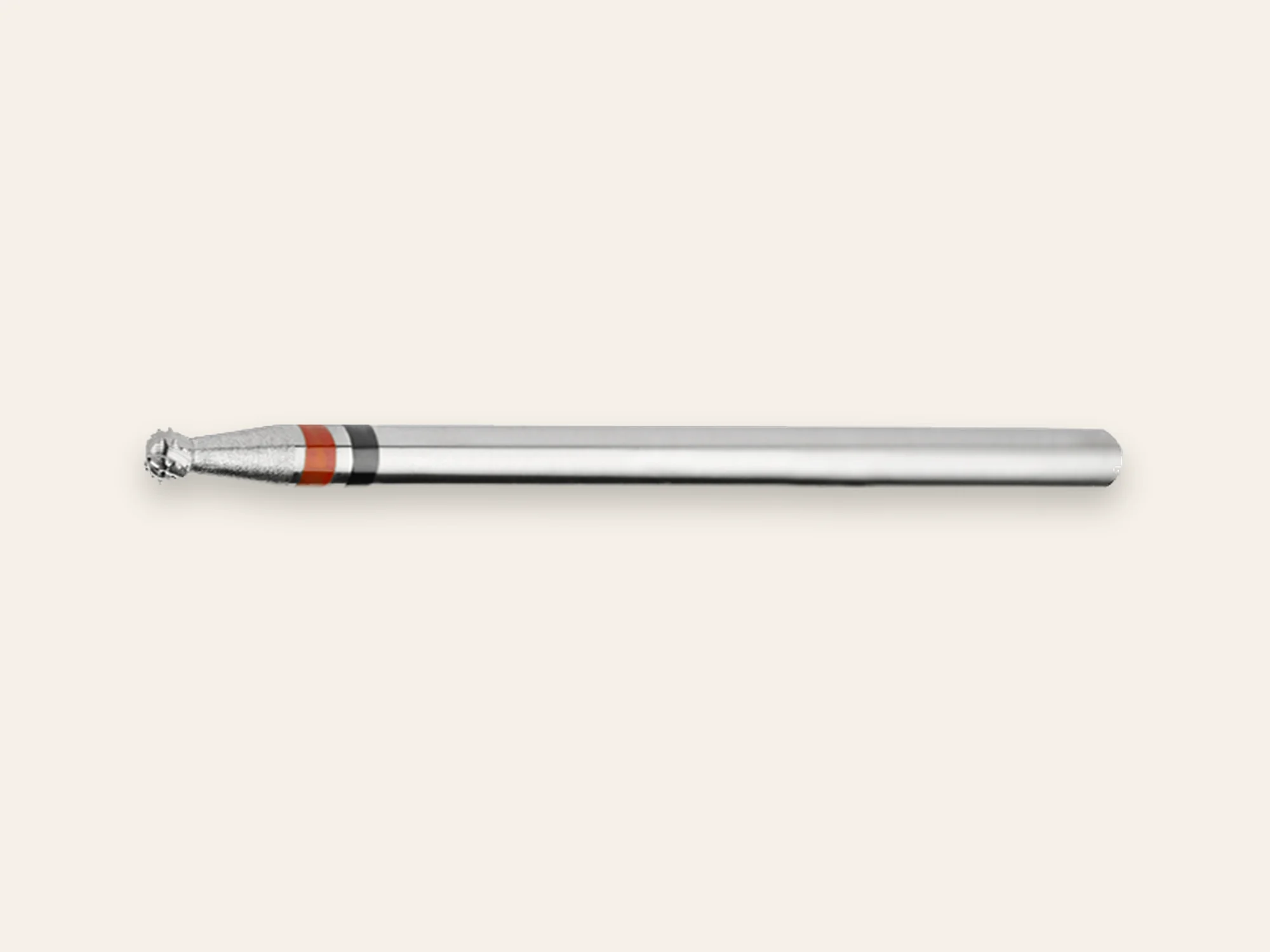
| Ball (Ø 2–4 mm) | Expose nucleus, core work | Carbide coarse burr |
| Cone / torpedo bit | Deep-seated nucleus, subungual | Hard metal barrel burr |
| Flat cylinder | Remove surrounding hyperkeratosis | FW 621 Barrel Burr |
| Coarse profile | Strong peripheral keratoses | FW 670 Coarse Burr |
The FW 670 Carbide Burr is suitable for rapid removal of the outer callus layers around the corn. The coarse profile removes hyperkeratosis effectively without drifting into deeper layers. The FW 621 Barrel Burr then handles the more precise work in the nucleus zone.
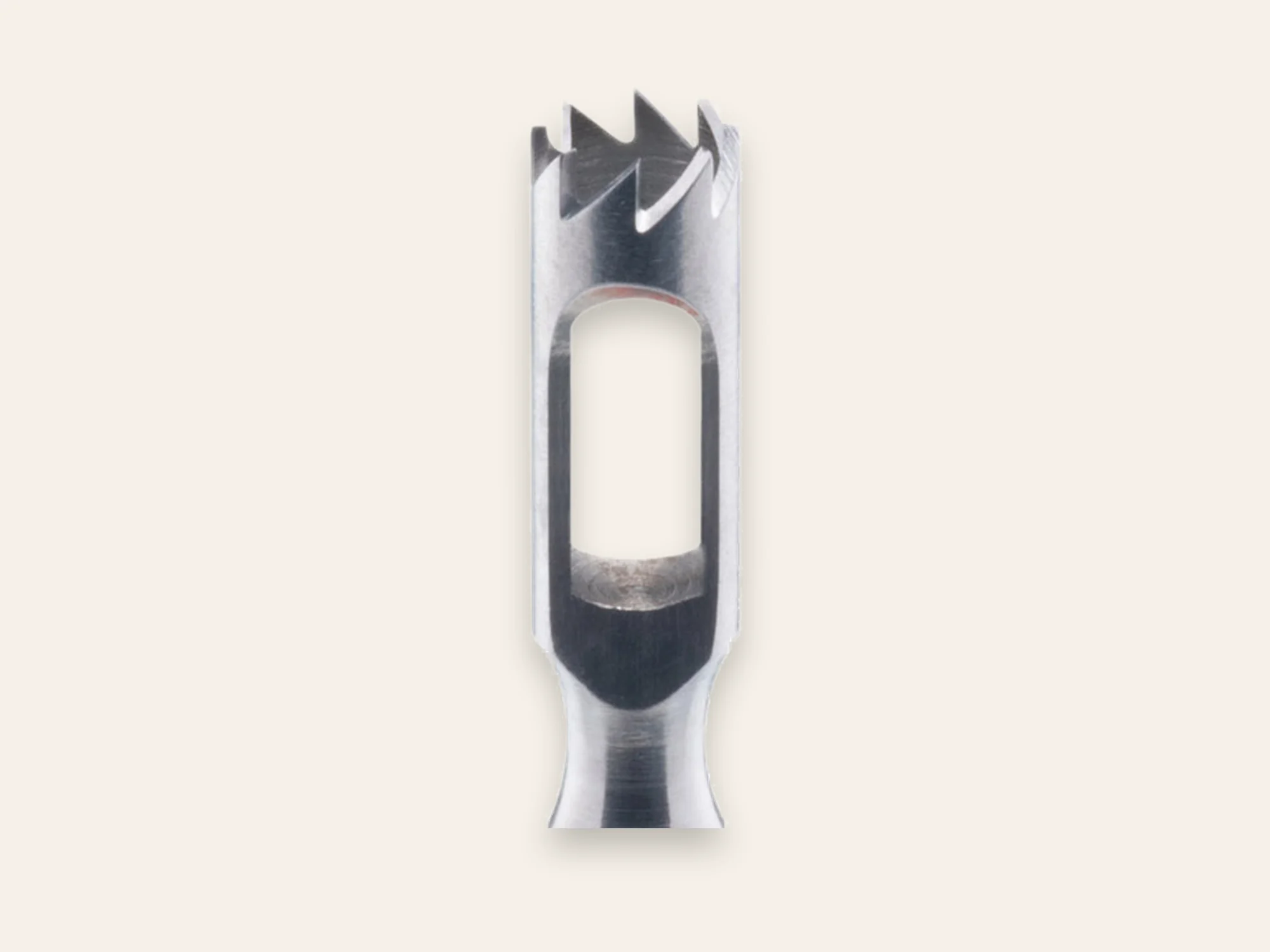
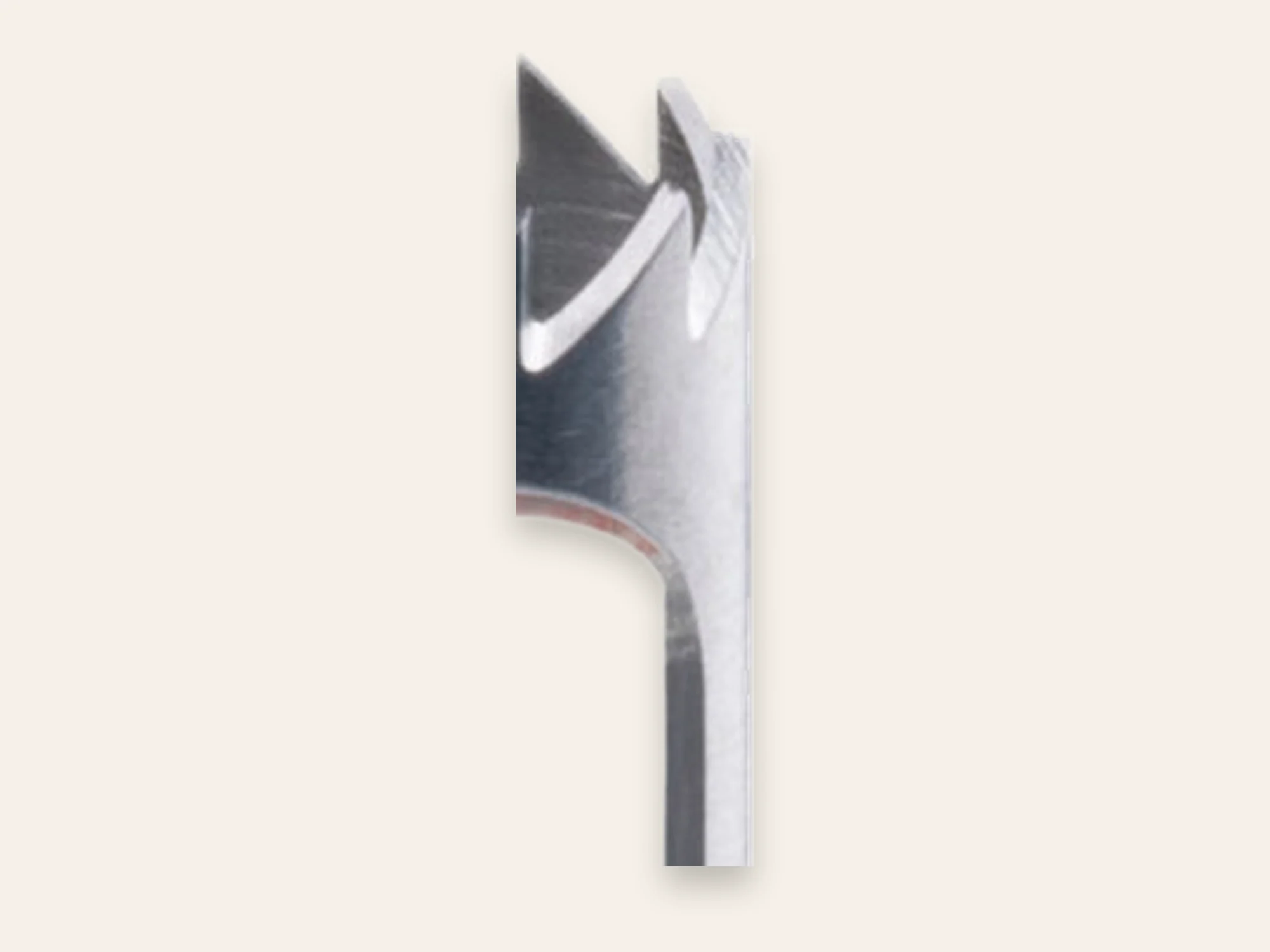
Vacuum Burr (Crown Burr) — for Callus and Transition Areas
The Vacuum Burr FW 01 (Crown) is particularly well suited for flat removal of the hyperkeratosis surrounding the corn — its crown profile removes callus material evenly and prepares the zone for precise nucleus work. The integrated dust suction effect keeps the working surface clear.
Diamond Burr — Final Finish, Not Nucleus Work
Diamond attachments are used after the main reduction: for smoothing the treatment area and finishing work on sensitive tissue. They are not suitable for actual corn work — insufficient removal rate and excessive heat generation at the contact time required.
Our Diamond Burr 6-piece Set contains various grits and shapes for finishing and polishing.
Technique: Step-by-Step Corn Treatment
1. Preparation
- Disinfect the feet (spray or swab), allow to dry
- Inspect the lesion: size, depth, surrounding area, signs of inflammation?
- Select the burr: choose the head shape to match the corn form
- Handpiece: set speed to 10,000–15,000 rpm (carbide starting range), no vibration
2. Peripheral Reduction
Begin not at the nucleus, but at the periphery of the hyperkeratosis. Using the cylindrical or coarse burr, the outer callus layer is removed until the clear boundary with normal skin is visible. Always keep the burr moving — never linger on one spot.
3. Expose the Nucleus
Using a smaller ball-head burr (Ø 2–3 mm) or pointed torpedo attachment, work toward the nucleus. Direction: from outside inward, concentrically. The nucleus is recognisable by its glassy, transparent appearance and deeper pigmentation.
Depth control: When in doubt, remove too little rather than too much. The nucleus does not need to be completely removed — the patient’s pain experience determines the depth. Once pressure pain subsides, the decompression is achieved.
4. Final Treatment
After nucleus work: diamond burr or fine abrasive sleeve for surface smoothing. Leave no sharp-edged transition between treated and untreated areas.
5. Pressure Offloading
Treatment is only half the solution. Without pressure offloading (padding, orthopaedic insole, footwear advice), the corn will recur within weeks. Discuss the underlying cause with the patient and recommend appropriate measures.
Speed Recommendations by Burr Type
| Burr type | Recommended speed | Note |
|---|---|---|
| Carbide coarse (FW 670) | 10,000–20,000 rpm | Consistent movement, do not linger |
| Carbide cylinder (FW 621) | 15,000–25,000 rpm | For nuance work |
| Vacuum crown burr | 8,000–12,000 rpm | Utilise suction performance |
| Fine diamond | 10,000–15,000 rpm | Minimal contact pressure |
All carbide and ceramic burrs from Celniv are made with a 2.35 mm shank and fit all standard podiatric handpieces. They are autoclavable (134 °C, pre-vacuum) and therefore comply with the RKI requirements for reusable medical devices.
Common Errors in Corn Treatment
Excessive contact pressure: The burr works with its cutting flutes — no force is required. Pressure leads to heat and tissue damage.
Dwelling too long on one spot: Always work in circular or gliding movements, never burr in a stationary position.
Over-reducing the nucleus: Bleeding signals that the dermis has been reached. Stop immediately, provide first aid, end the treatment session.
No follow-up: Corn treatment is not a one-time procedure. Schedule a follow-up appointment after 4–6 weeks.