Podiatrists
NiTi Correction Wire 0.14 vs. 0.20 mm: Which Gauge for Which Nail?
Choose NiTi wire thickness: 0.14 mm vs. 0.20 mm for nail brace correction — indications, material parameters and technique notes for professional nail bracing in podiatry.
June 17, 2026

Nickel-titanium (NiTi) is the standard material of modern nail bracing (onychoorthosis) — superelastic, shape-memory capable, and biocompatible. However, the question of which wire diameter to select for which nail is often oversimplified in training. This article explains the materials science fundamentals and provides concrete decision-making guidance for everyday clinical practice.
Why Wire Diameter Matters
NiTi wire operates on the principle of superelasticity: when bent, the material adopts a new form and, in attempting to return to its original shape, exerts a constant restoring force. This force corrects the nail curvature.
The restoring force is directly dependent on the cross-section — a thicker wire exerts considerably more force than a thin one at the same degree of bending. This sounds straightforward, but has concrete clinical implications: excessive corrective force on a fragile nail can damage the nail plate or cause pain; insufficient force on a thick, severely curved nail produces no measurable effect.
NiTi Wire 0.14 mm: The Standard Diameter
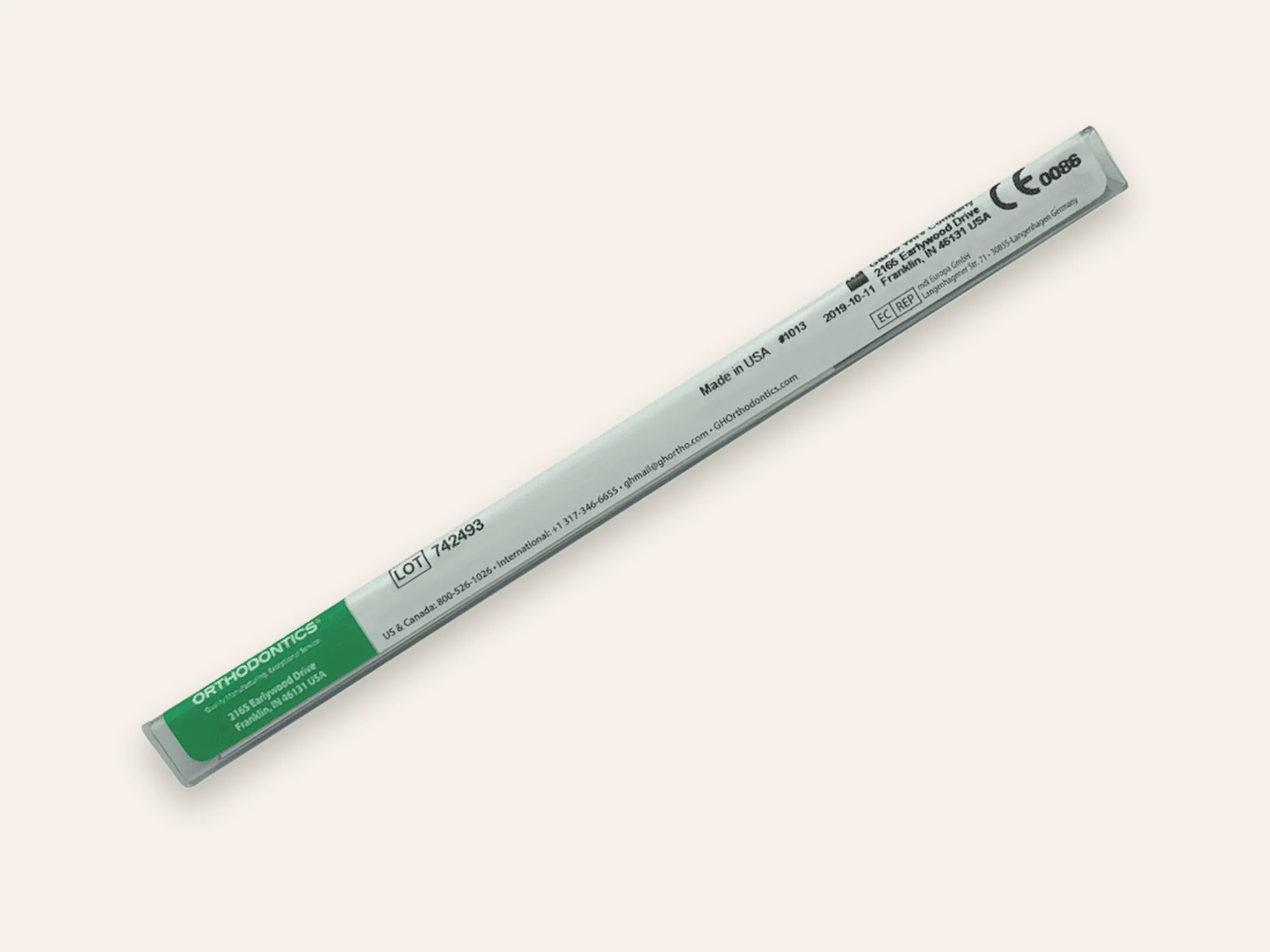
The NiTi Correction Wire 0.14 mm is the most widely used diameter in clinical practice. It offers a balanced ratio of corrective force and material flexibility.
Properties 0.14 mm:
- Lower stiffness — easier to bend, less hand force required during application
- Gentle, uniform corrective tension
- Suitable for normal to moderate nail curvatures
- Lower risk of trauma to sensitive or thin nail plates
Indications for 0.14 mm:
- Initial treatments (entry-level indication)
- Normal great toenail with mild to moderate inrolling
- Young patients with thin to normal nail substance
- Nails following onychomycosis (weakened plate)
- Longer wearing periods (6–8 weeks) with minimal pressure sensation
NiTi Wire 0.20 mm: For Stronger Corrections
The 0.20 mm wire is stiffer and exerts more corrective force. It is used when 0.14 mm has demonstrably proved insufficient or the nail morphology demands it.
Properties 0.20 mm:
- Higher stiffness — more bending resistance, greater restoring force
- Stronger corrective tension
- Requires slightly more hand force during bending — high-quality bending pliers become more important here
Indications for 0.20 mm:
- Severe inrolling (tube nail, pronounced transverse curvature)
- Wide, thick nail plates (great toenail on a broad toe)
- Cases where 0.14 mm has shown no measurable corrective progress at the review appointment
- Older patients with very dense, compact nail substance
Direct Comparison: 0.14 vs. 0.20 mm
| Criterion | 0.14 mm | 0.20 mm |
|---|---|---|
| Corrective force | moderate | high |
| Bendability | good | slightly more resistance |
| Nail load | low | moderate |
| Wearing comfort | very good | good |
| Typical indication | Standard to moderate case | Strong curvature, thick nail |
| Beginner-friendliness | high | moderate |
Bending Technique: What Changes Between the Gauges
Both gauges are processed with the same basic instruments. The application technique is identical — but 0.20 mm wire is less forgiving with tight bends:
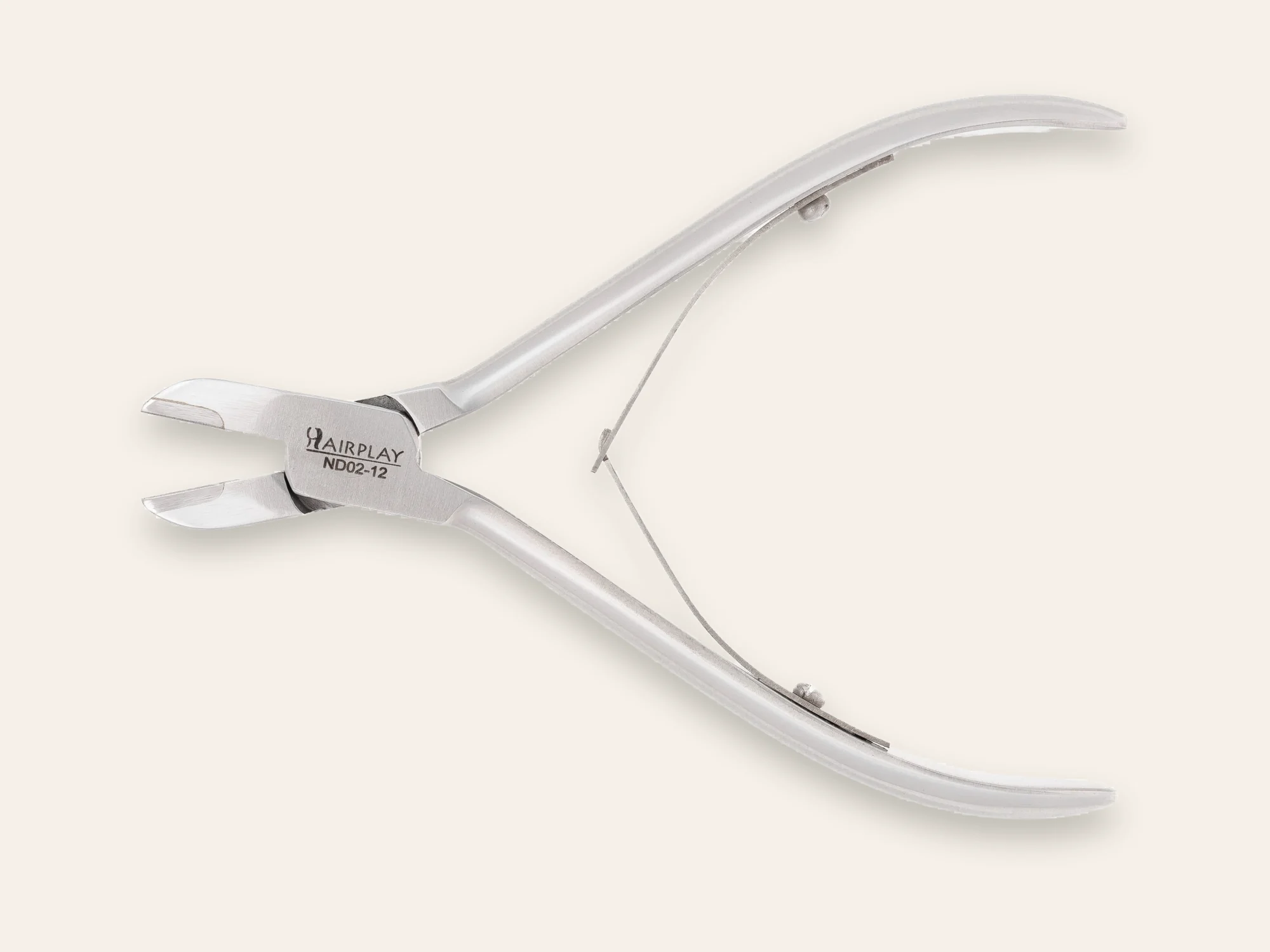
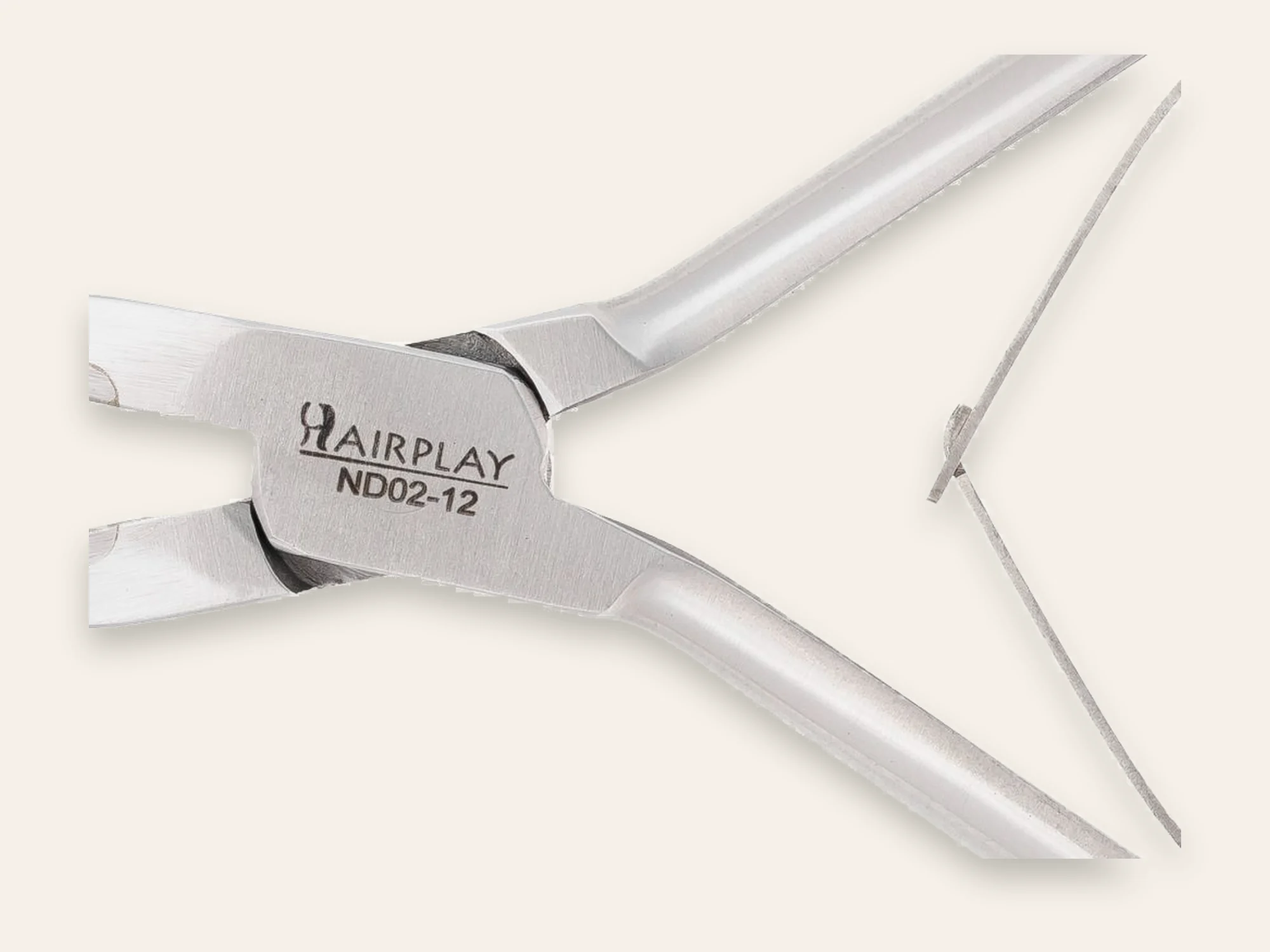
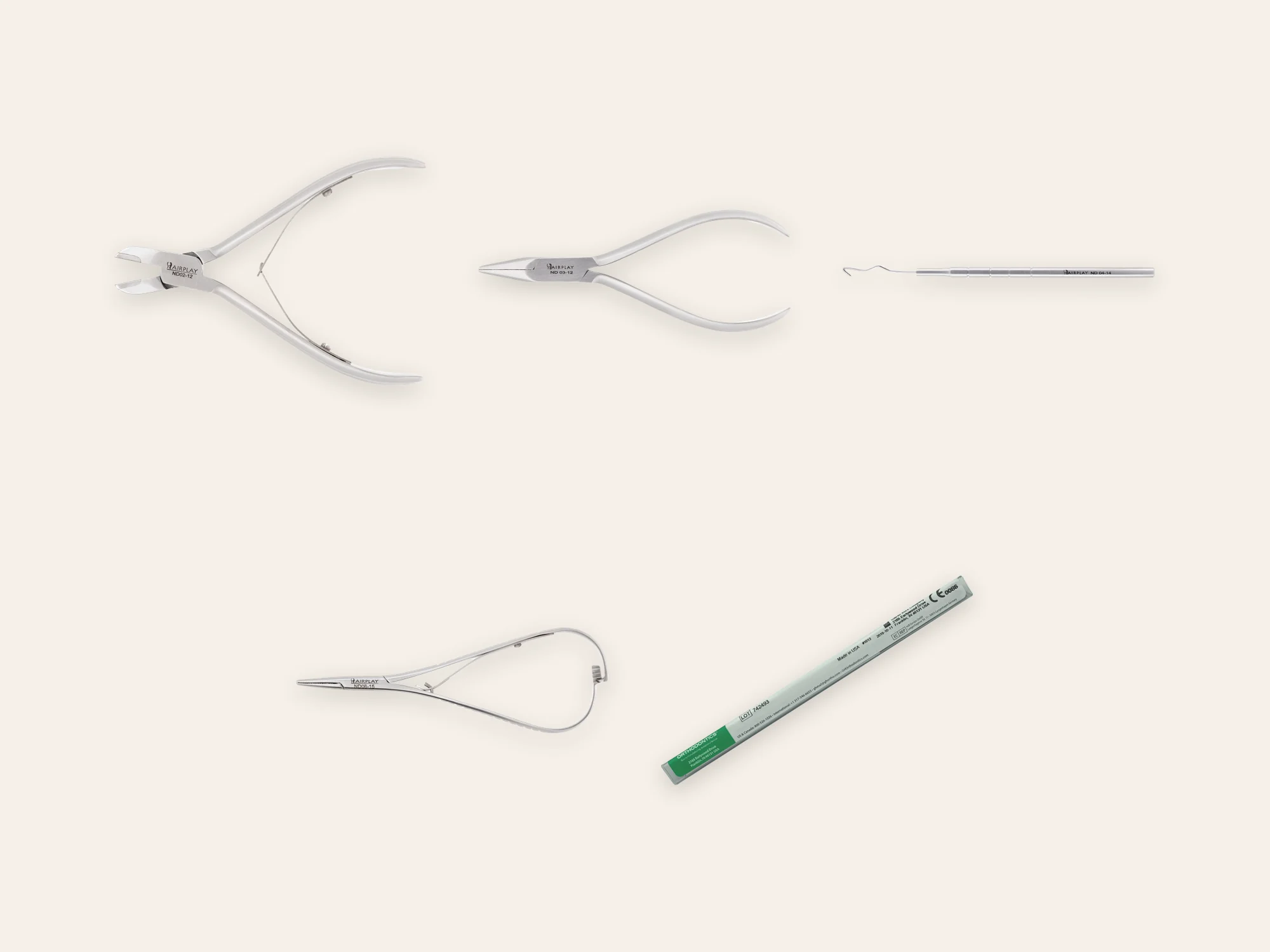
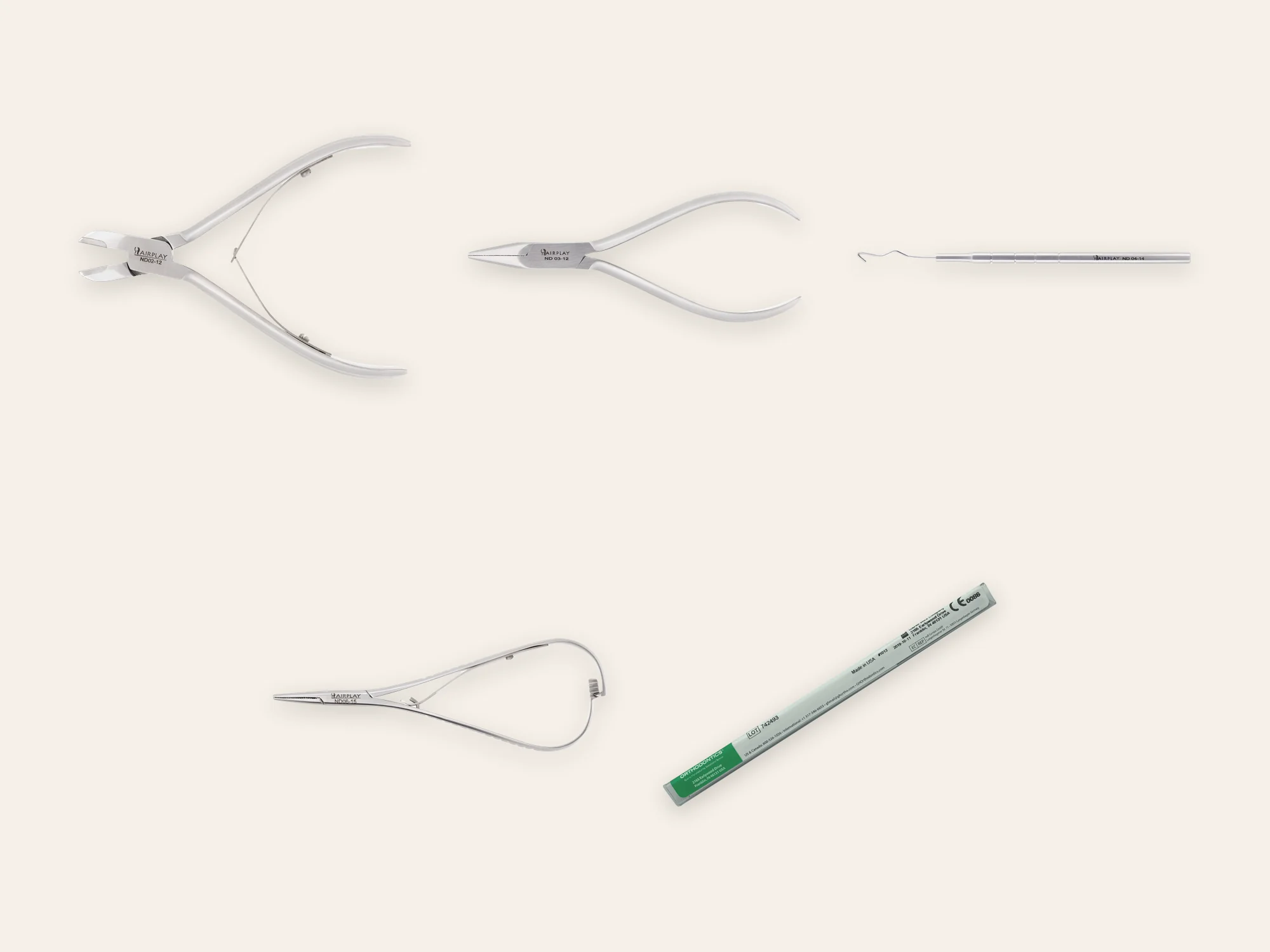
Cutting the wire: The Wire Cutting Pliers ND 02-12 is designed for both gauges. A clean, perpendicular cut without pressure deformation — particularly important since the wire end must be inserted beneath the nail edge. A crushed end can no longer be cleanly hooked in.
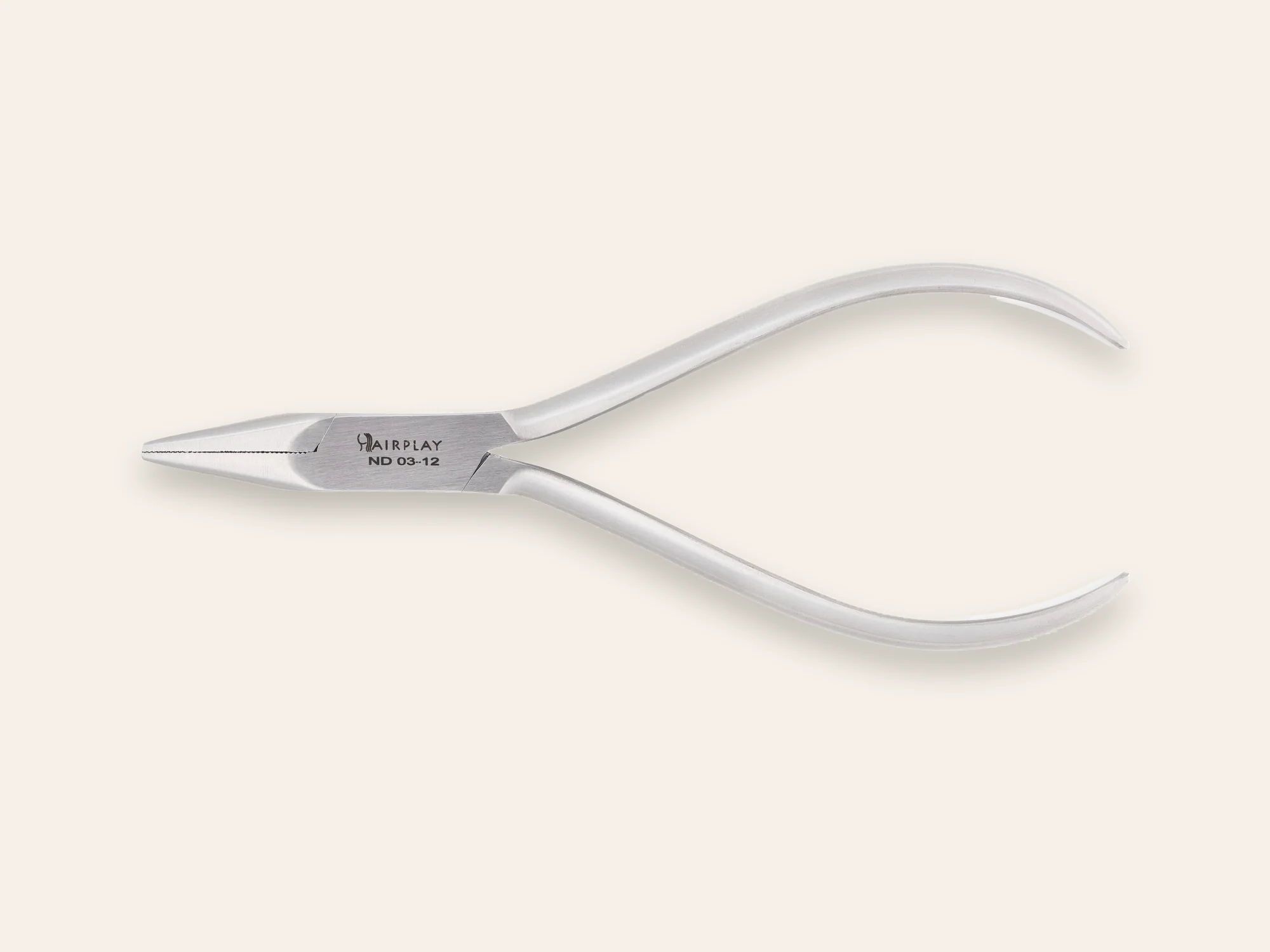
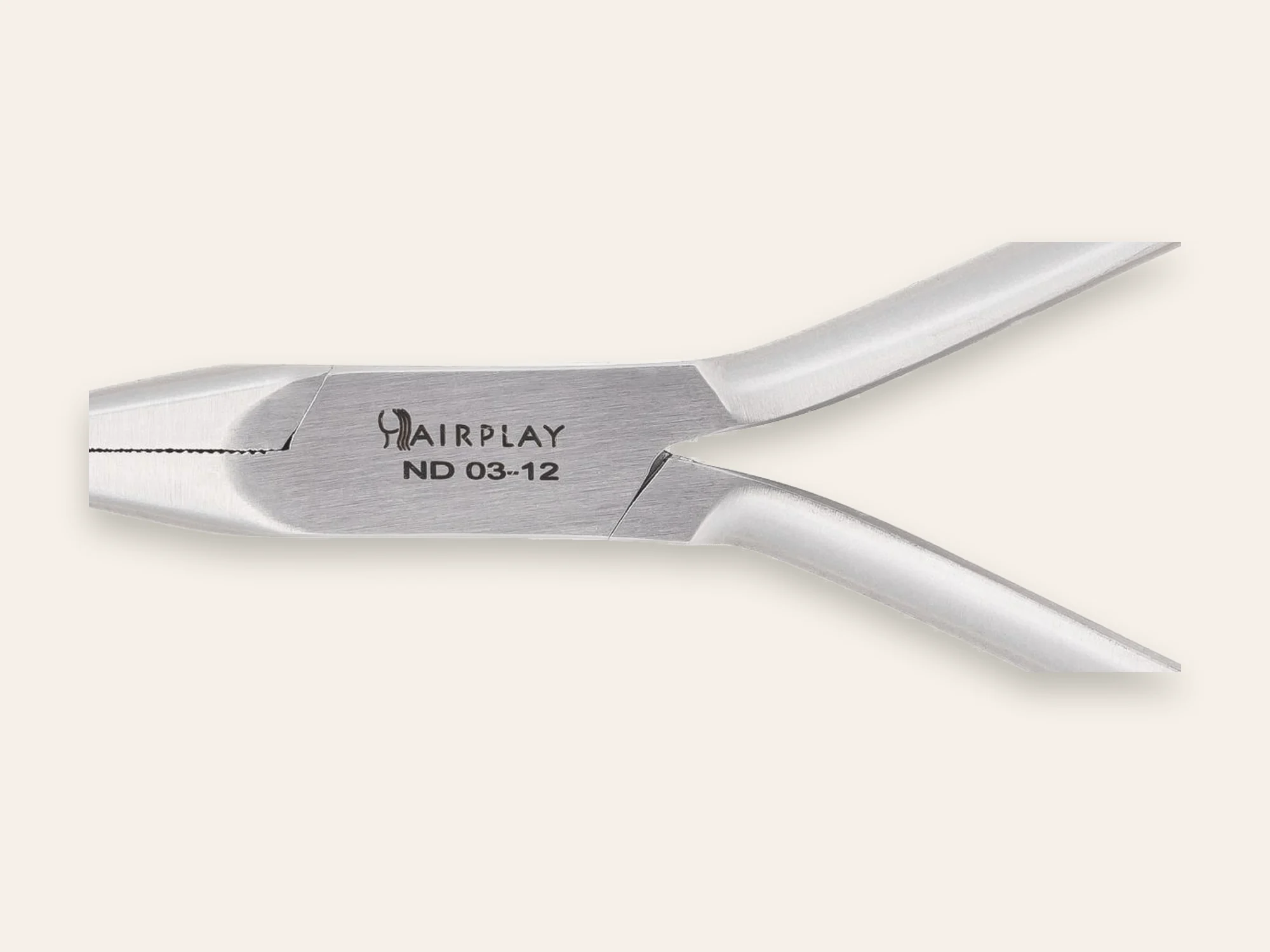
Forming arcs: The Bending Pliers ND 03-12 (half-round) is used to form the end arcs. With 0.20 mm: approach the bending angle in small increments, do not over-extend in a single movement (cold deformation beyond the superelastic range).
Application beneath the nail edge: Both gauges are threaded using the onychoorthosis Delfin pliers (ND series) or an application hook. With 0.20 mm, slightly more finger pressure may be needed — steady guidance is more important than speed.
The Onychoorthosis Starter Set (ND 02-12 + ND 03-12 + ND 04-14 + ND 06-15 + NiTi 0.14 mm) is the ideal starting point; practitioners who regularly treat difficult cases supplement with 0.20 mm wire from the ongoing range.
NiTi Braces as an Alternative to Wire
Alongside freeform wire, there are pre-fabricated NiTi correction braces that are placed directly on the nail without bending pliers. The NiTi Correction Brace Set (3 pieces + applicator) offers three sizes for different nail widths.
Brace systems are simpler to apply but less individually adaptable — the freeform wire allows more precise fitting to the specific nail geometry through manual bending.
| NiTi Wire | NiTi Brace | |
|---|---|---|
| Individual adaptation | very high | moderate |
| Application technique | requires nipper set | simpler |
| Material cost per application | very low | moderate |
| For strong curvatures | very good | limited |
Practical Recommendation
With 0.14 mm, approximately 80–85% of all nail bracing cases in practice can be treated. The 0.20 mm gauge is not a replacement but a targeted supplement for specific indications. Practitioners who keep both gauges available and know the decision criteria can cover the full spectrum of ingrown and inrolled nails.