Podiatrists, beauticians
Podiatry Burrs Compared: Carbide, Diamond & Ceramic
Which podiatry burr for which indication? Carbide, diamond and ceramic nail drill bits compared — head shapes, care and value for professional podiatrists. UK buyer's guide.
June 17, 2026
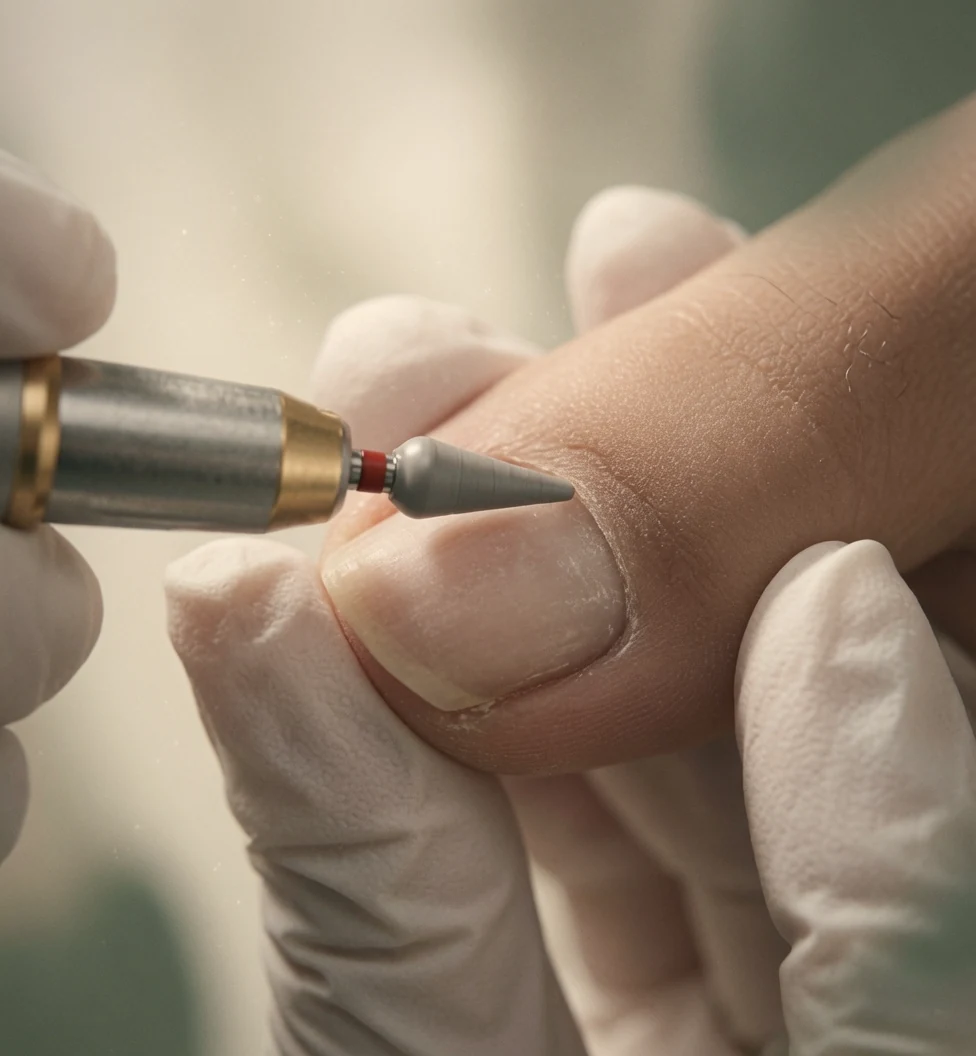
The right burr determines the outcome of a podiatric treatment — and the service life of your handpiece. Whether you are assembling your first professional burr set or optimising your existing range: this guide explains the available burr types, their differences, and which attachment is best suited to each indication.
The Three Most Important Burr Types in Podiatry
1. Carbide Burr (Hard Metal)
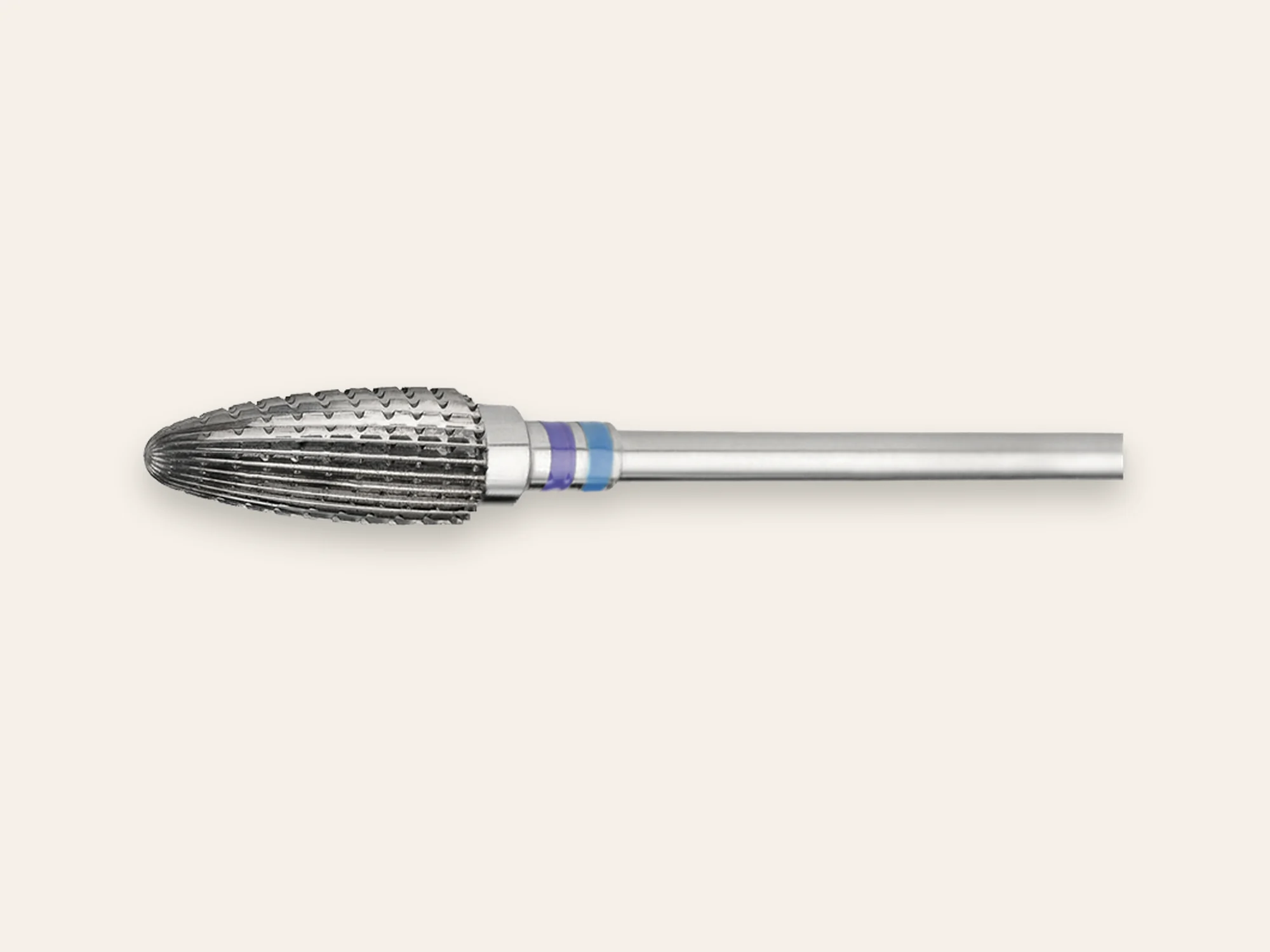
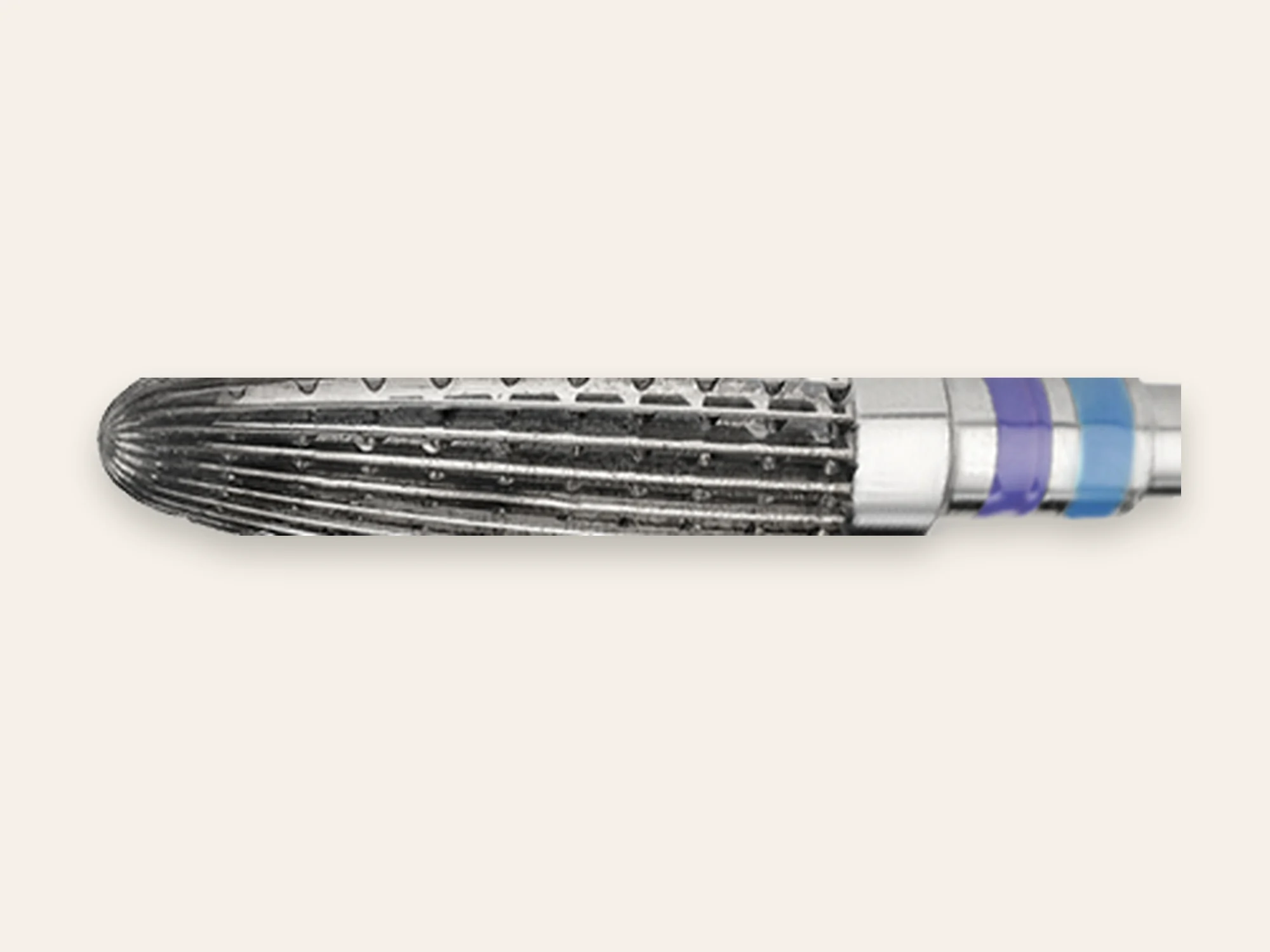
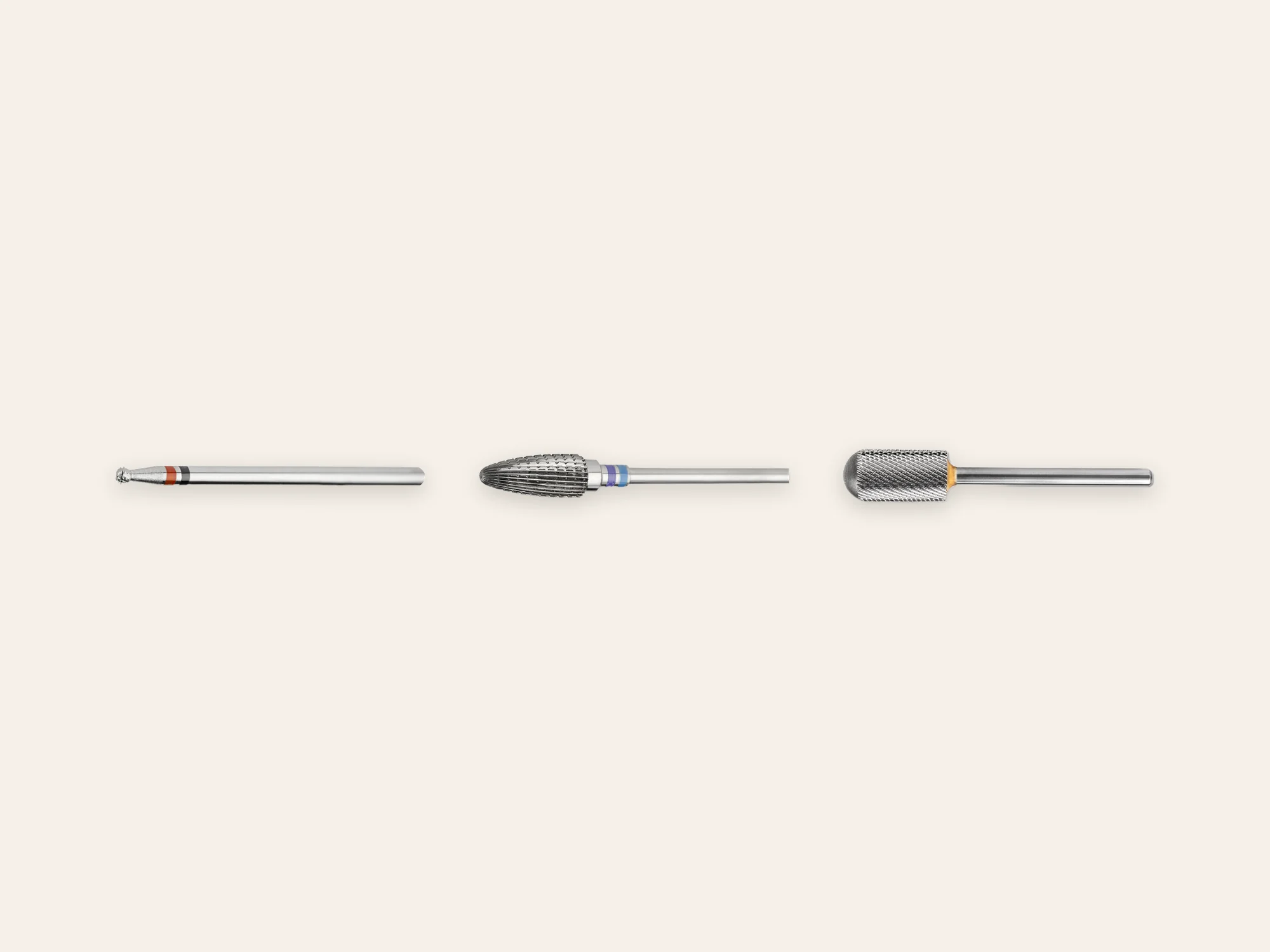
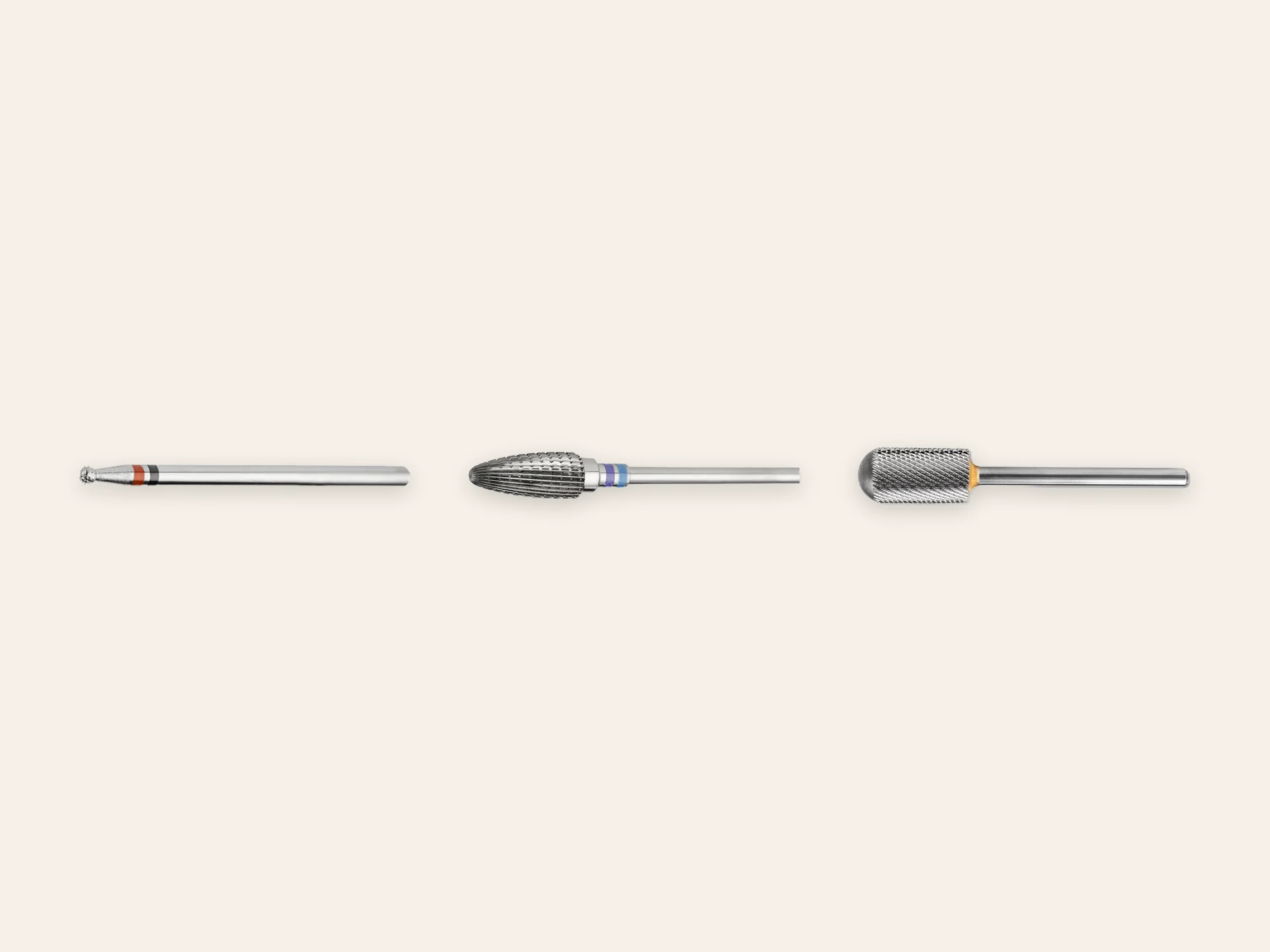
Carbide burrs are made of tungsten carbide — one of the hardest materials used in foot care. Their specialised cutting flutes (6–8 cutting edges, depending on the model) remove callus, thickened nail plates, and gryphotic nails precisely and in a controlled manner.
When to use:
- Strong hyperkeratoses (callus, corns)
- Thickened, discoloured, or mycotically changed nails
- Gryphotic nails (ram’s horn nails, onychogryphosis)
- Nail fold treatment
Advantages:
- Very long service life with proper care (autoclavable to 134 °C)
- Precise work even on hard structures
- Reusable — economical for everyday practice
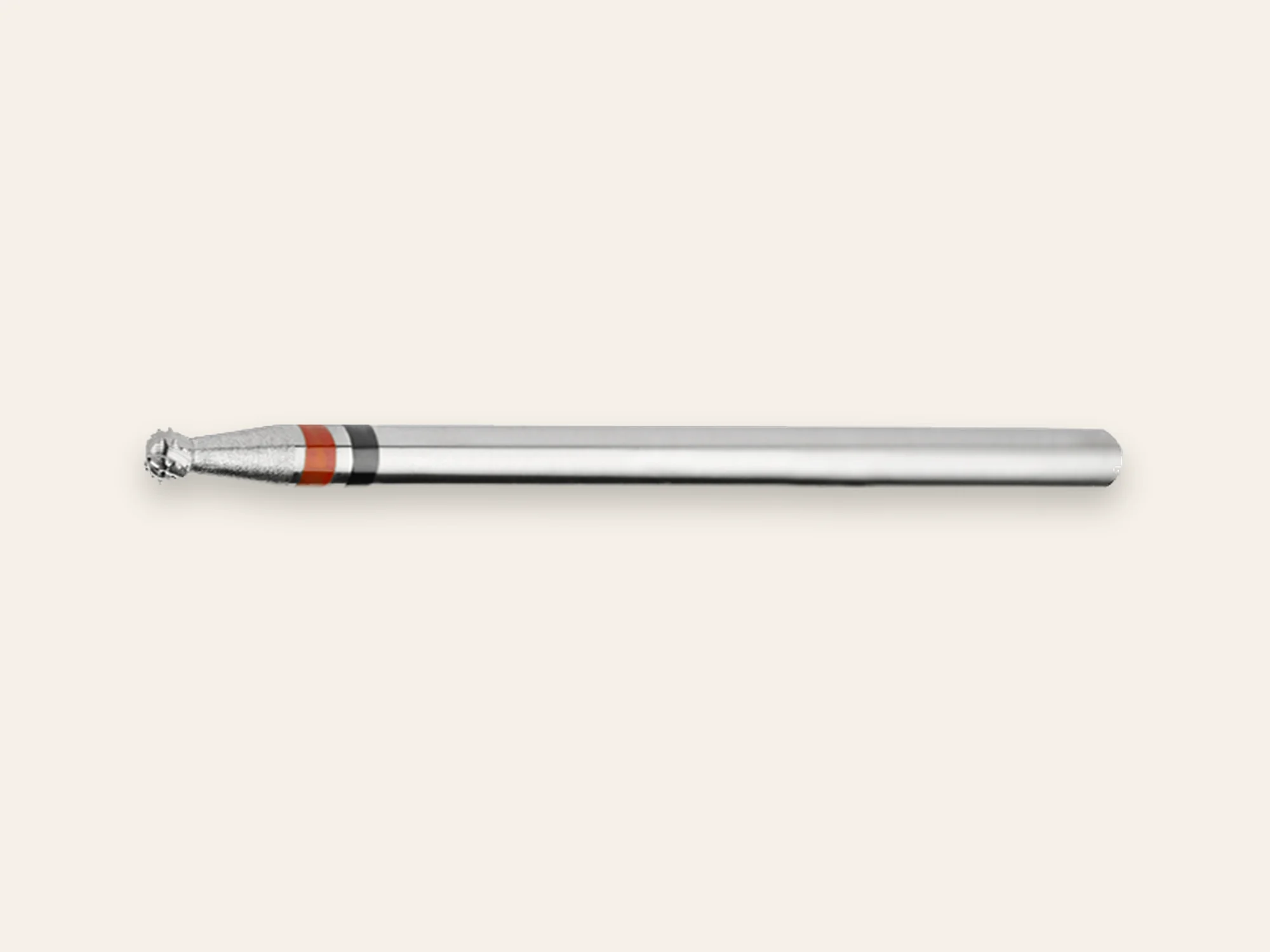
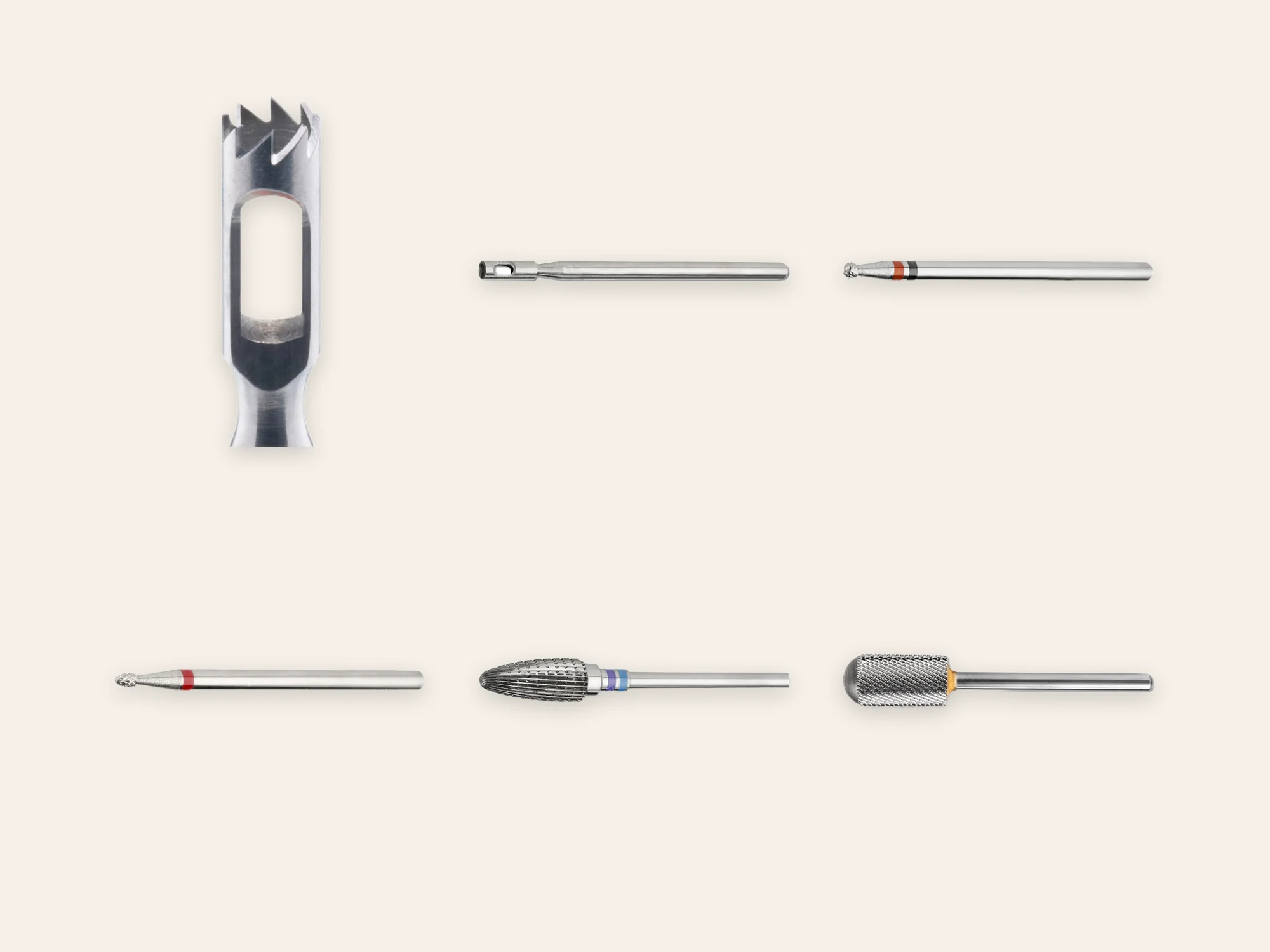
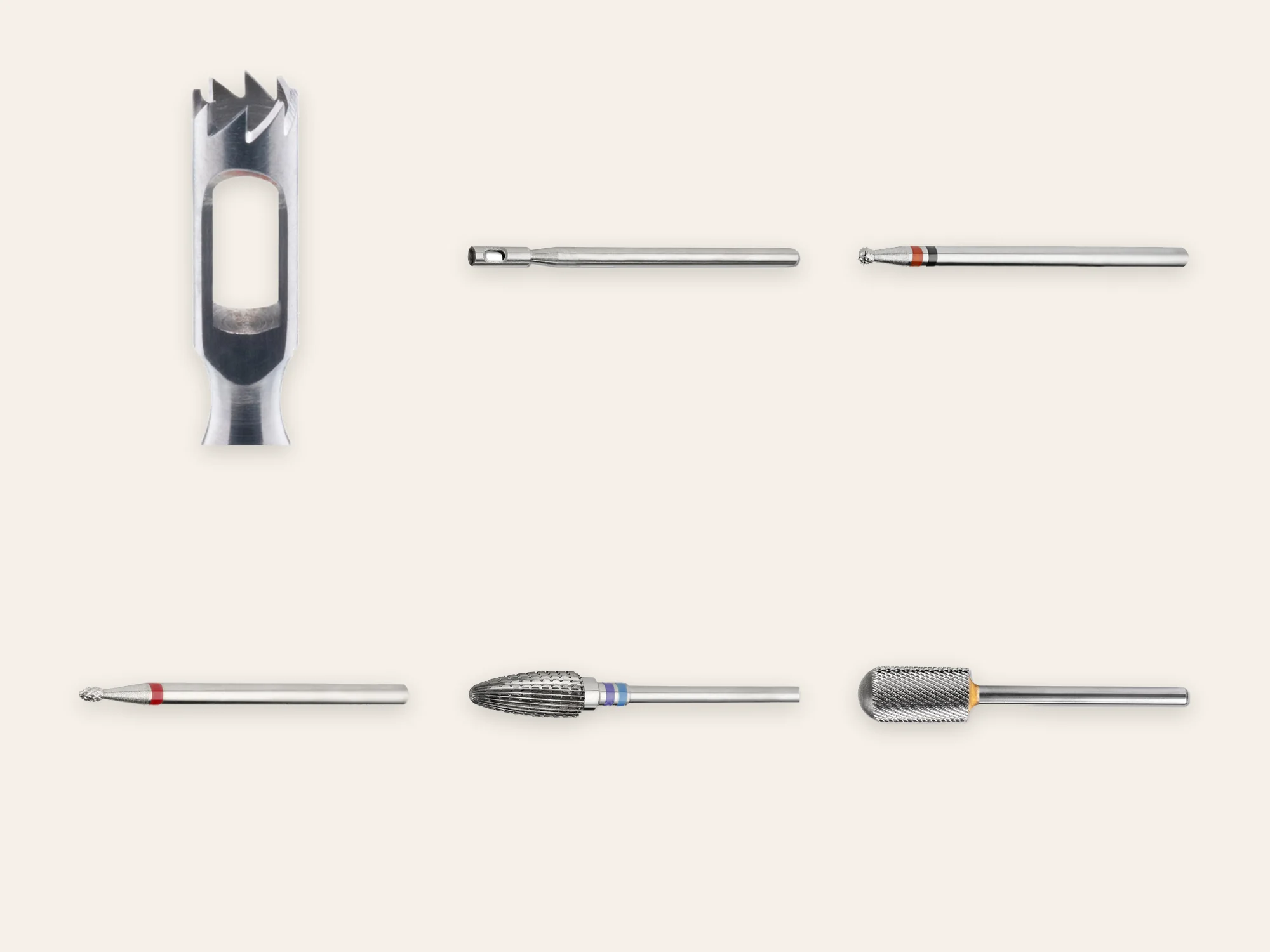
- Wide range of head shapes: ball, cylinder, cone, cross-cut
Recommended service period: 4–8 weeks of intensive use, then check sharpness.
Value tip: High-quality carbide burrs from brands such as Hairplay are typically considerably less expensive than Busch instruments (€18–22 vs. €30–44) — with comparable material quality and autoclavability.
2. Diamond Burr
Diamond attachments are coated with synthetic diamond particles. They grind rather than cut — making them particularly gentle on sensitive skin and nail edges.
When to use:
- Fine nail polishing and surface smoothing
- Sensitive skin around the nail fold
- Nail studio, manicure/pedicure
- Removal of gel and acrylic residue
Advantages:
- Very delicate work, minimal heat generation at moderate speed
- Various grits (fine, medium, coarse) for different applications
- Affordable entry prices, well suited to mix sets
Limitations:
- Not suitable for heavy callus removal (too slow)
- Diamond coating wears faster than carbide material
- At excessive speed: heat transfer to the nail
3. Ceramic Burr
Ceramic attachments sit between diamond and carbide. They are particularly well suited for practitioners seeking a versatile attachment — with moderate removal rate and good compatibility with skin and nail.
When to use:
- Treatment of soft to moderate nail structures
- Nail studio (modelling gel nails)
- Pedicure attachments for regular care treatments
Advantages:
- Less heat than metal attachments
- Durable, autoclavable
- Good for clients with sensitive skin or heat sensitivity
Abrasive Sleeves & Drum Sanders: the Disposables
A separate category is formed by abrasive sleeves (sanding band attachments, drum sanders). These are screwed or fitted onto mandrel pins and discarded when worn — no sterilization required.
Advantage: Maximum hygiene in everyday practice, rapid changeover between patients, no contamination risk. Application: Callus removal, nail plate preparation, callus planing.
Abrasive sleeves in 10 mm and 13 mm diameter, grits 80 and 150, are standard in podiatric practice. Our drum sander sets come in 10-piece packs and cover all common applications.
Quick Reference: Which Burr for Which Indication?
| Indication | Recommendation | Note |
|---|---|---|
| Heavy callus / corns | Carbide (hard metal) cylindrical | Medium speed, cross strokes |
| Gryphotic / thick nail | Carbide ball head or cross-cut | Use with suction |
| Nail fold / ingrown nail | Narrow cone-shaped carbide | Caution: soft tissue, slow |
| Mycotic nail (fungal) | Carbide; sterilize after treatment | Single-use abrasive sleeve as alternative |
| Nail smoothing / care | Fine diamond or ceramic | Low speed |
| Nail studio / gel | Diamond or ceramic | Grit according to material |
| Between-patient changeover | Abrasive sleeves (disposable) | No sterilization required |
What to Consider When Purchasing
1. Compatibility with Your Handpiece
Burr attachments are supplied in shank diameters of 2.35 mm (standard podiatry/dental) and 3 mm (some cosmetic devices). Check the collet range of your handpiece before purchase.
2. CE Marking
For use in professional podiatric practice, instruments should be CE-compliant and classified as Class I medical devices. This is also relevant for billing with health insurers. Ensure your supplier provides appropriate documentation (technical file, EU Declaration of Conformity).
3. Autoclavability
Carbide and ceramic burrs are generally autoclavable to 134 °C (pre-vacuum). Check the manufacturer’s specifications — and never autoclave diamond attachments with resin-bonded particles.
4. Volume Purchasing is Worthwhile
Carbide burrs have a long service life — but maintaining a stock of 5–10 per shape makes sense so you are not waiting for deliveries during active use. Many suppliers offer volume discounts.
Our Recommendation for Starting a Practice
A solid basic range for a podiatric practice comprises:
- 2–3 carbide burrs (ball + cylinder + cone) for daily nail work
- 1–2 diamond burrs (fine + medium) for surface polishing
- 1 abrasive sleeve set (10 mm / 13 mm, grits 80+150) for callus
- Optional: 1 cross-cut carbide for gryphotic nails
All these attachments are available in our burr range for podiatrists — CE-compliant, autoclave-suitable, at fair prices without going through a wholesaler.
Conclusion
Carbide is the all-rounder of podiatry: durable, precise, and economical for daily use on callus and nails. Diamond supplements for fine work and nail-tech applications. Ceramic offers a gentle middle ground. Abrasive sleeves are hygienic and practical for rapid changeover.
What matters is not only the burr type, but also quality of the cutting flutes, autoclavability, and correct CE documentation — particularly if you work in an approved podiatric practice.
Further reading: