Podiatrists
Treating Thickened & Gryphotic Nails (Onychogryphosis): Burrs and Technique
Gryphotic nails and thickened nails podiatry: which instruments for onychogryphosis, onychomycosis and geriatric nails? Technique, sequence and indication limits explained.
June 17, 2026
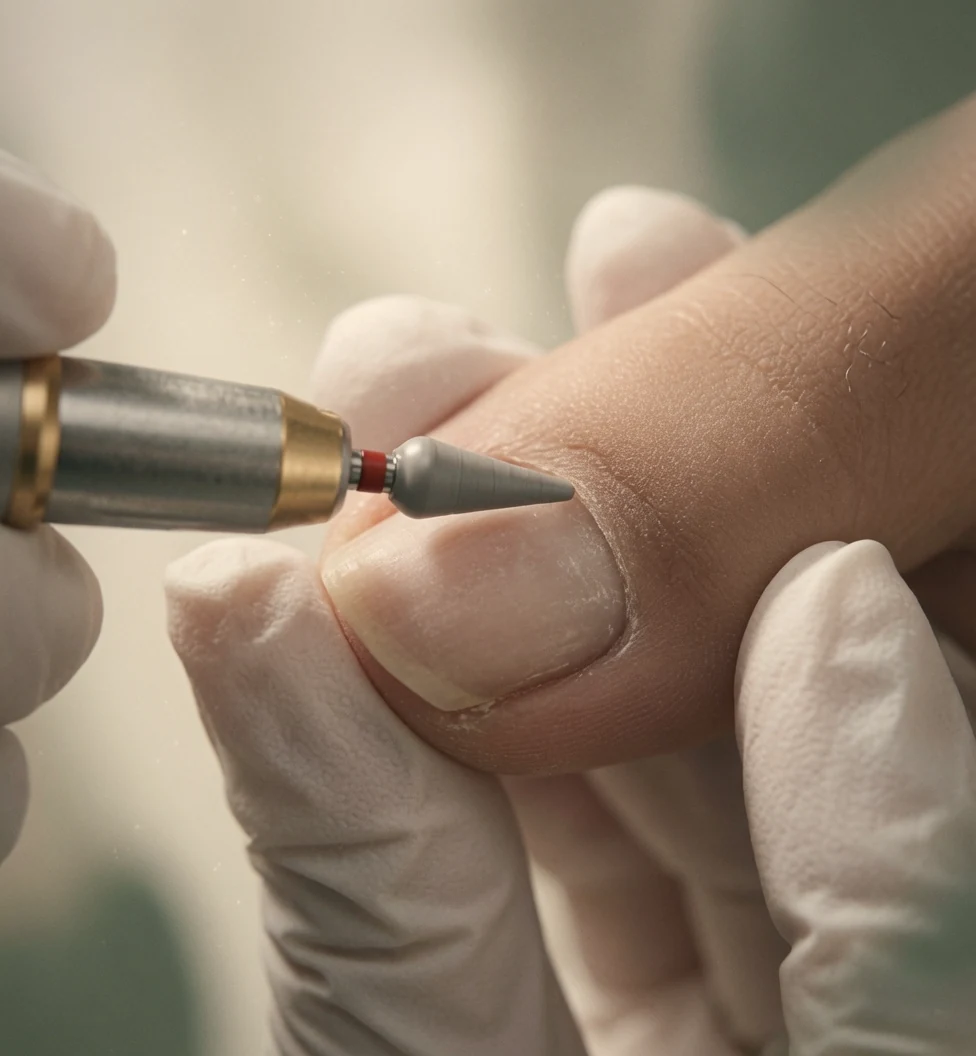
Gryphotic nails — also known as onychogryphosis or ram’s horn nails — are among the most labour-intensive treatment indications in podiatry. The nail plate is massively thickened, often deformed, harder than normal nail substance, and simply too much for standard instruments. Working with the wrong nipper or the wrong burr risks damaged instruments, an exhausted hand, and an unsatisfactory result.
What is Onychogryphosis — and What are Thickened Nails?
Onychogryphosis (gryphotic nail): The nail plate grows excessively in length and often twists laterally — caused by chronic circulatory insufficiency, trauma, years of pressure from ill-fitting footwear, or neglect. Colour: yellowish-brown to blackish. Consistency: extremely hard, dry, and brittle.
Onychomycosis with thickening: A fungal nail infection thickens the nail plate through subungual hyperkeratosis (accumulation beneath the nail). The plate is more friable than a gryphotic nail, but also considerably thicker than normal.
Geriatric nails without fungal infection: With age, the nail thickens due to reduced circulation and slowed growth, without any infection being present. Here the nail plate is compact and dry.
If onychomycosis is suspected (discolouration, crumbling, odour), mycological investigation should be performed before treatment. Burr attachments used on mycotic nails must be reprocessed with particular care, or single-use abrasive sleeves should be used instead.
Treatment Sequence: Cut First, Then Burr
The most important rule with severely thickened nails: length before burring. With the correct nail nipper, the nail plate is first shortened to a workable length — only then does the burr take over to reduce nail thickness.
Step 1: Shortening with the Geriatric Nail Nipper
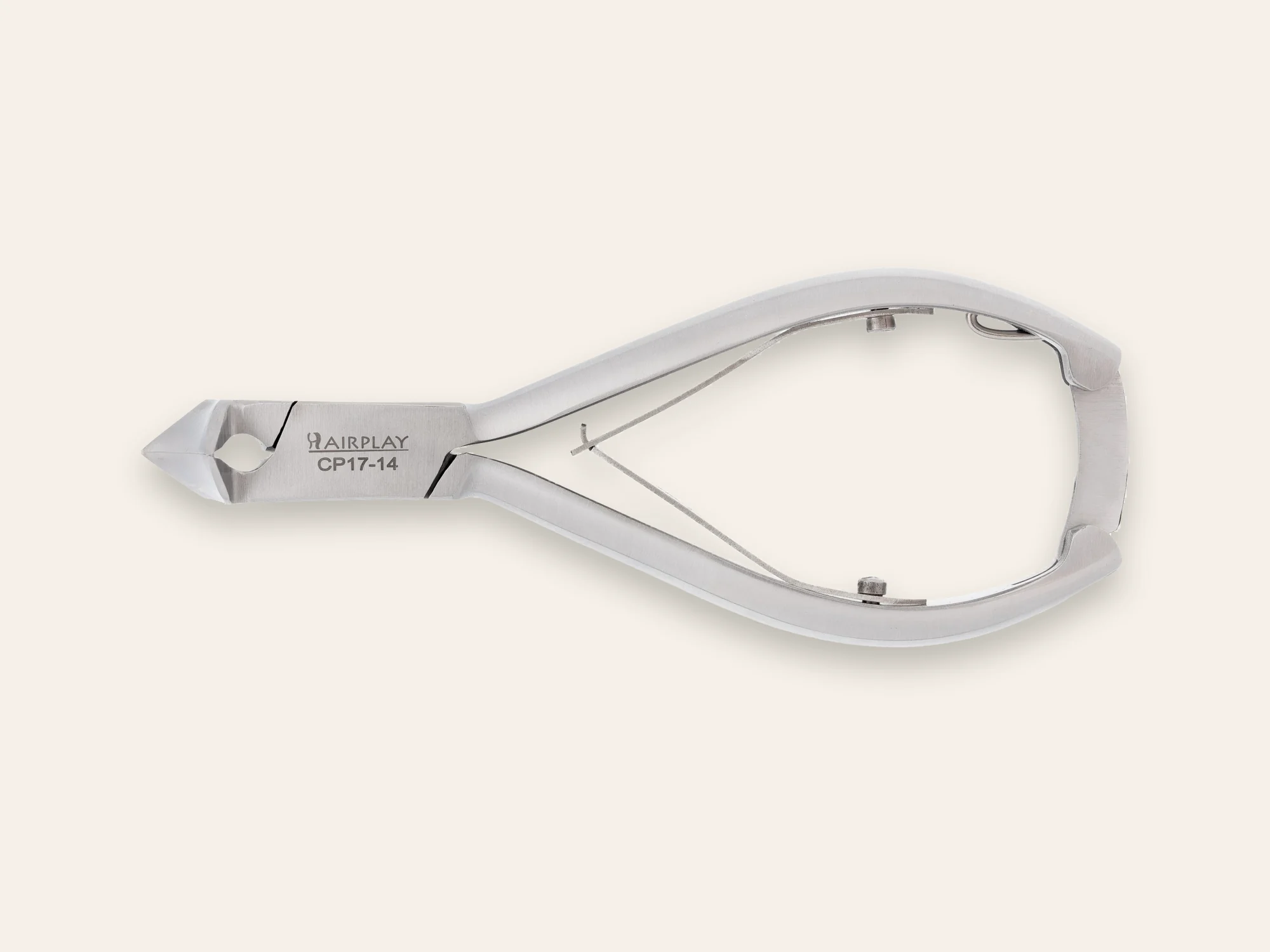
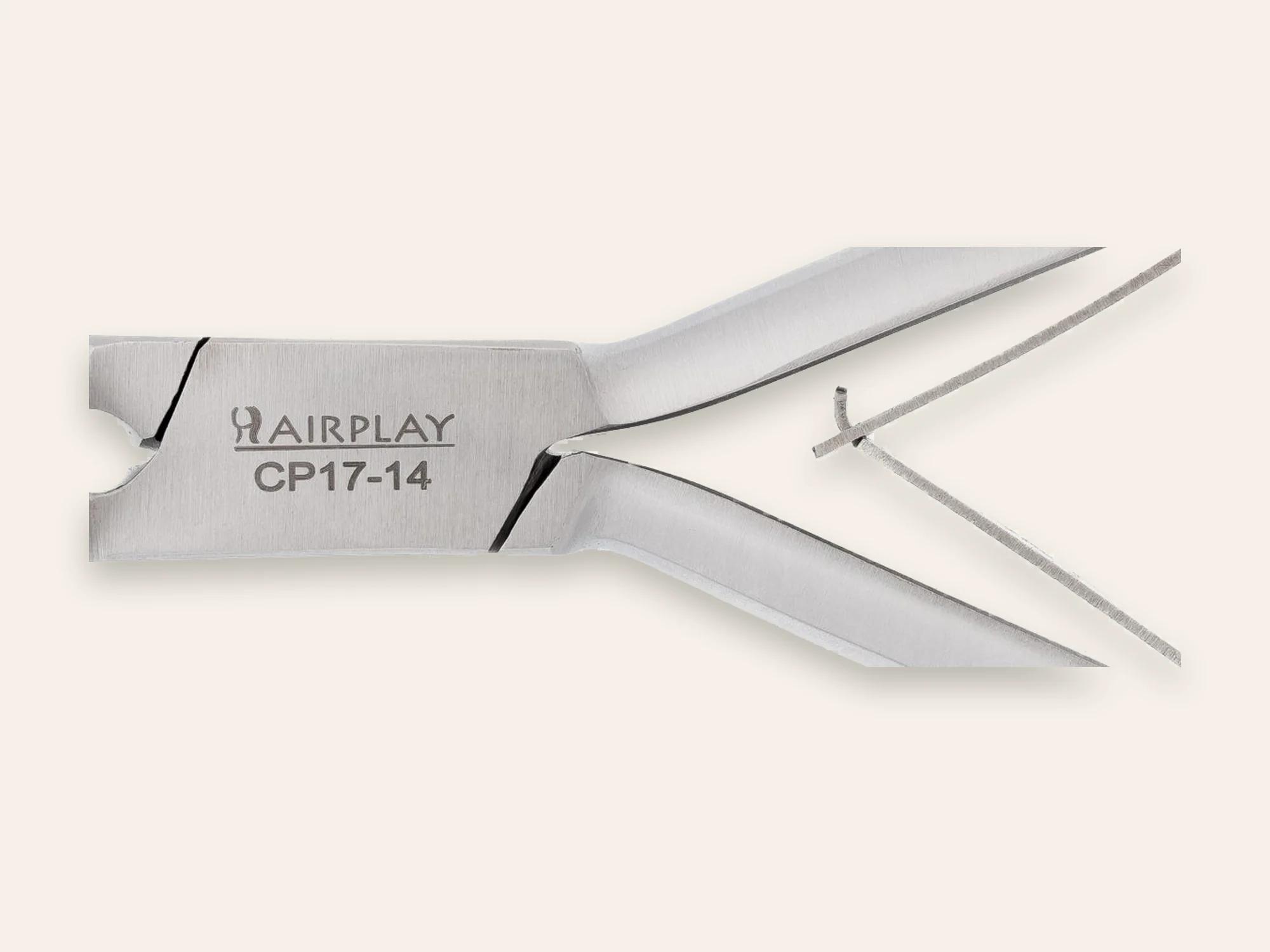
The Nail Nipper CP 17-14 is purpose-designed for this indication: reinforced joint, robust jaws, 14 cm length for maximum leverage. It cuts through nail plates 4–6 mm thick, where standard 12 cm nippers fail or bend.
Technique for trimming thick nails:
- Do not soak the nail before treatment (wet nails split more)
- Make the first cut laterally, not centrally — this allows the nail plate to be reduced in segments rather than broken through in a single pass
- Never force the cut — if the nipper gives way or becomes misaligned, this indicates excessively dense nail substance. Pre-thin with the burr first.
Step 2: Reduce Thickness with the Podiatry Burr
After shortening, burrwork follows to reduce the pathologically thickened nail plate to normal dimensions. This is the most time-intensive part of the treatment.
Burr selection for thickened nails:
| Indication | Burr | Rationale |
|---|---|---|
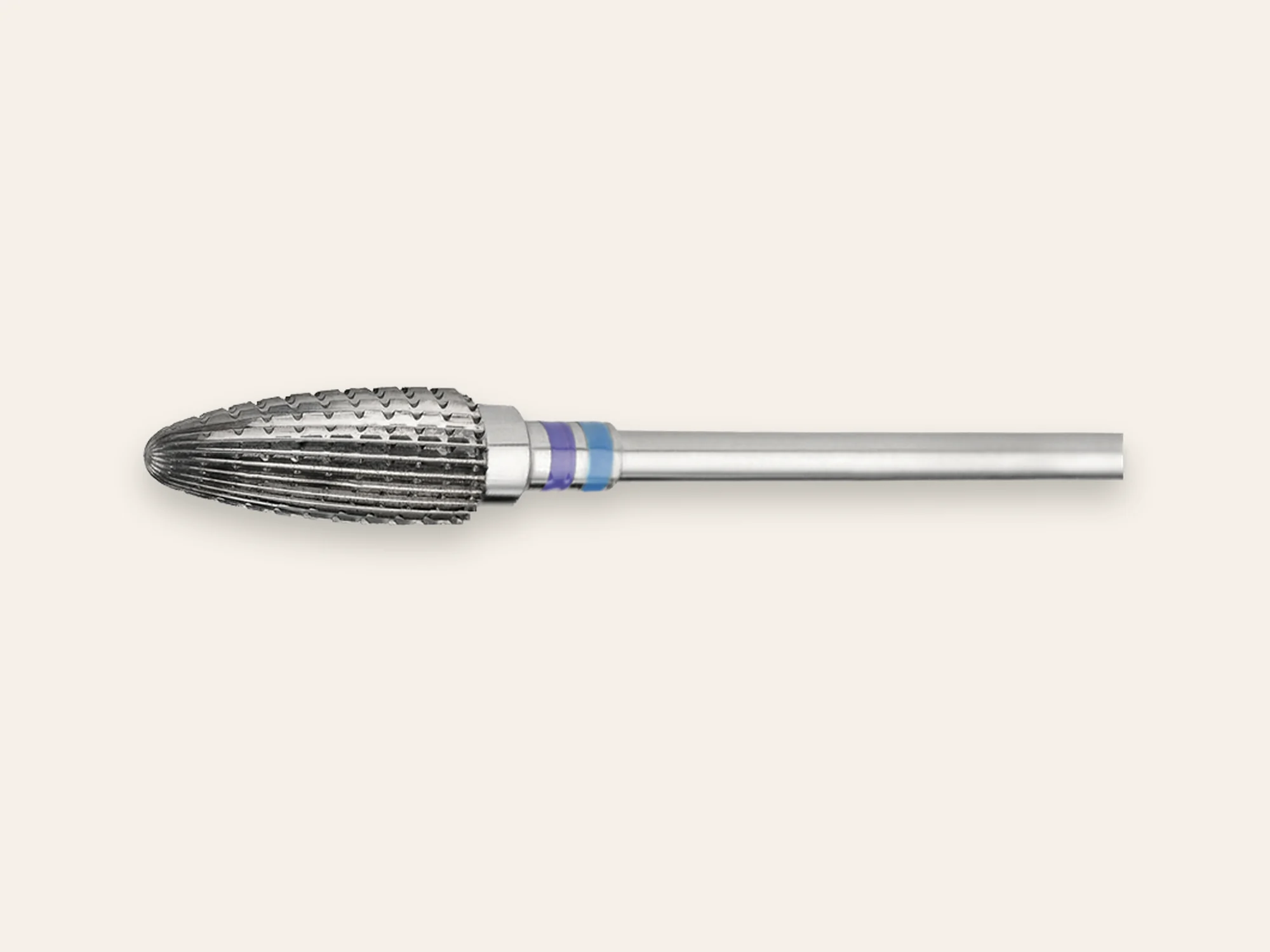
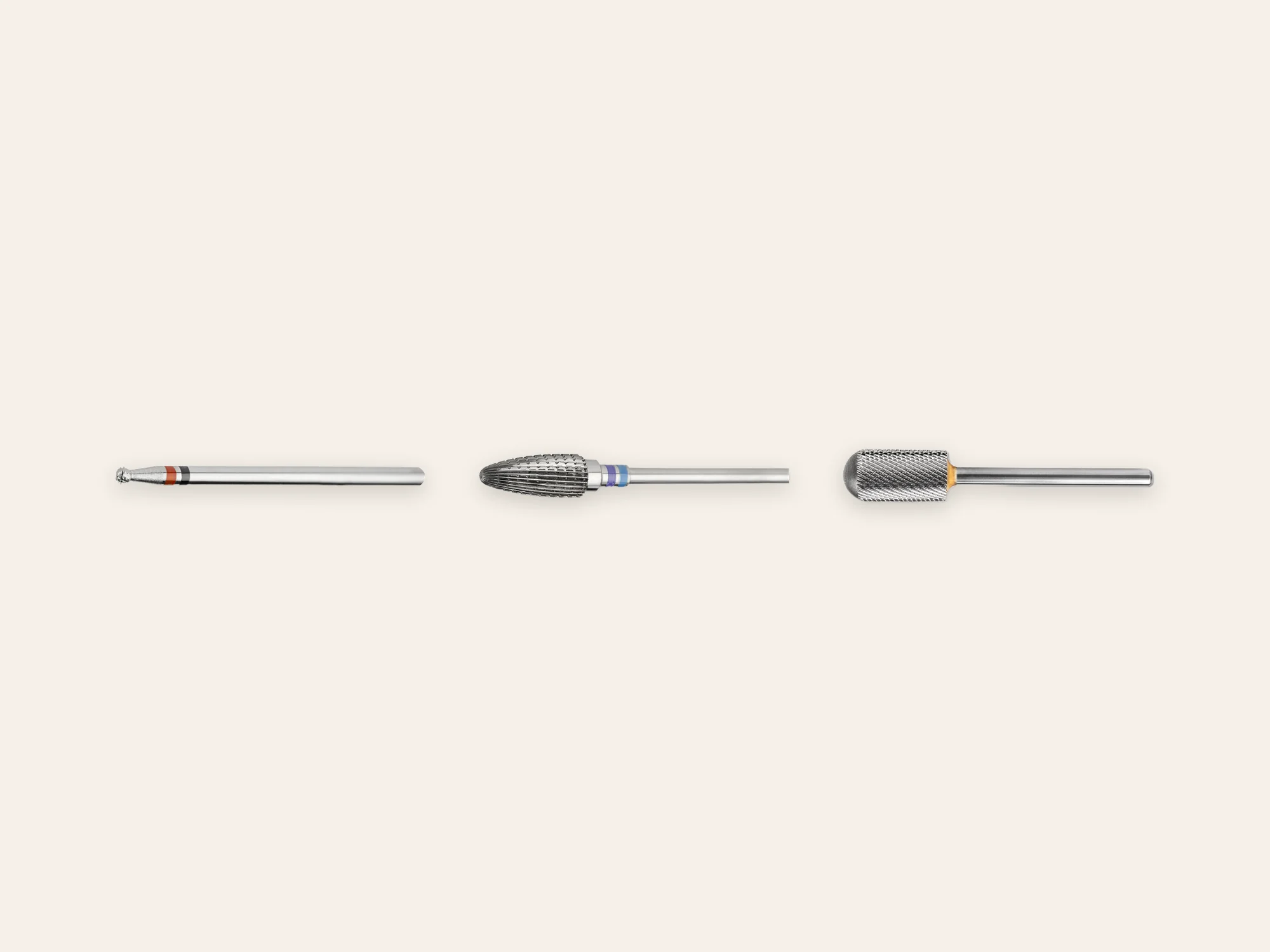
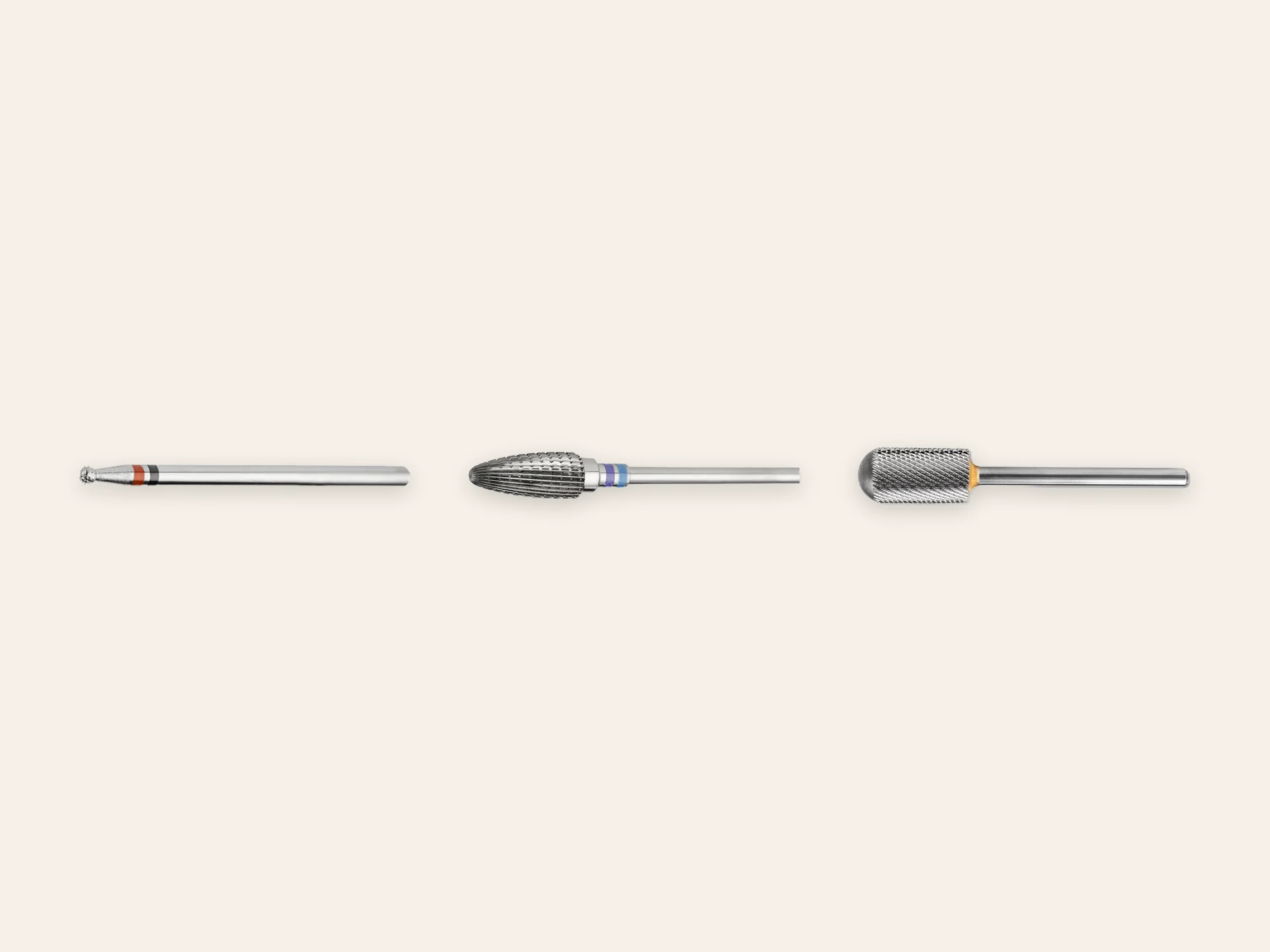
| Severe thickening, coarse removal | FW 670 Coarse Burr | High removal rate, coarse carbide profile |
| Finishing, nail edge | FW 621 Barrel Burr | More precise, cleaner surface |
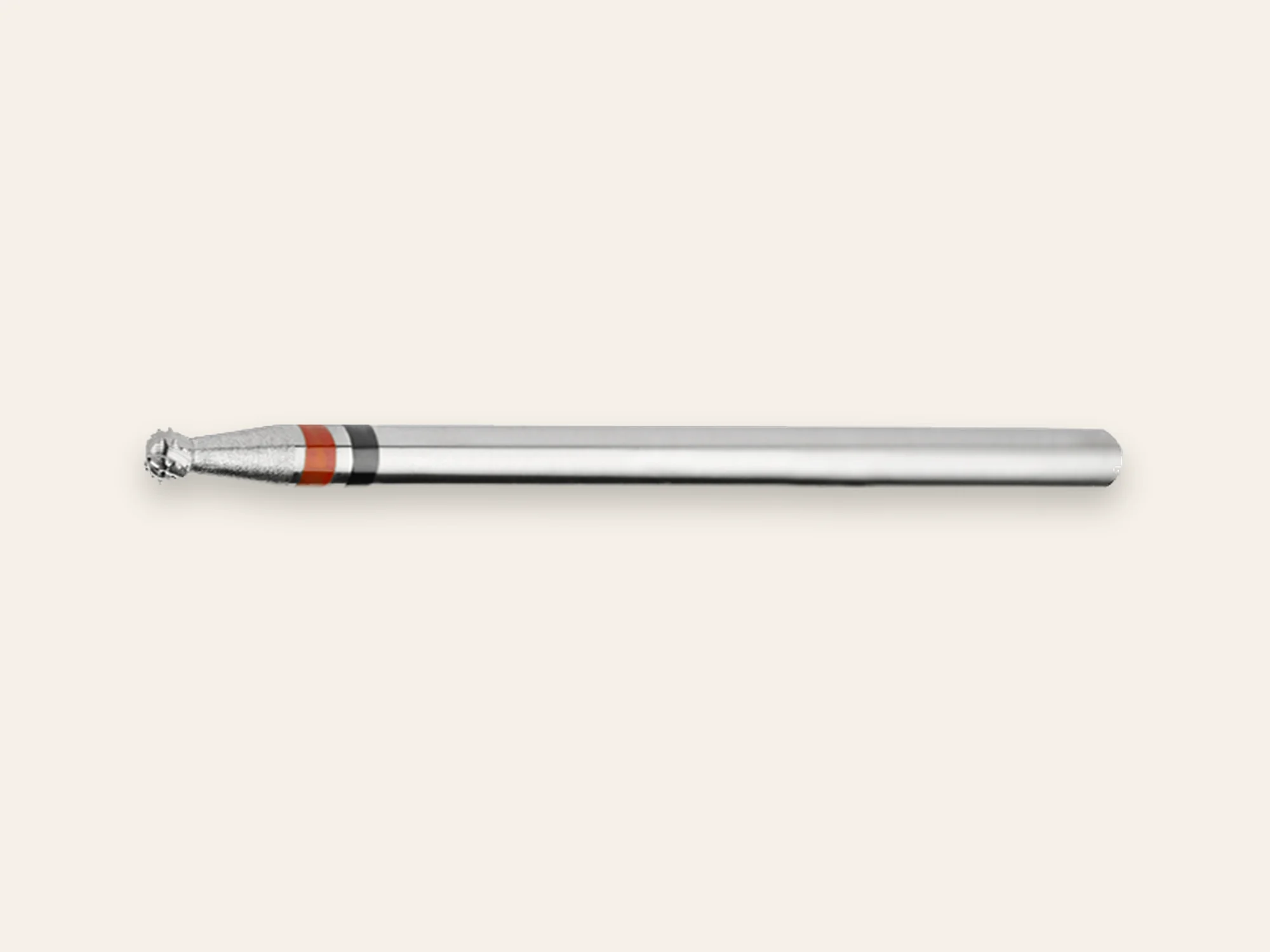
| Subungual hyperkeratosis | Ball or torpedo carbide | Access beneath the nail plate |
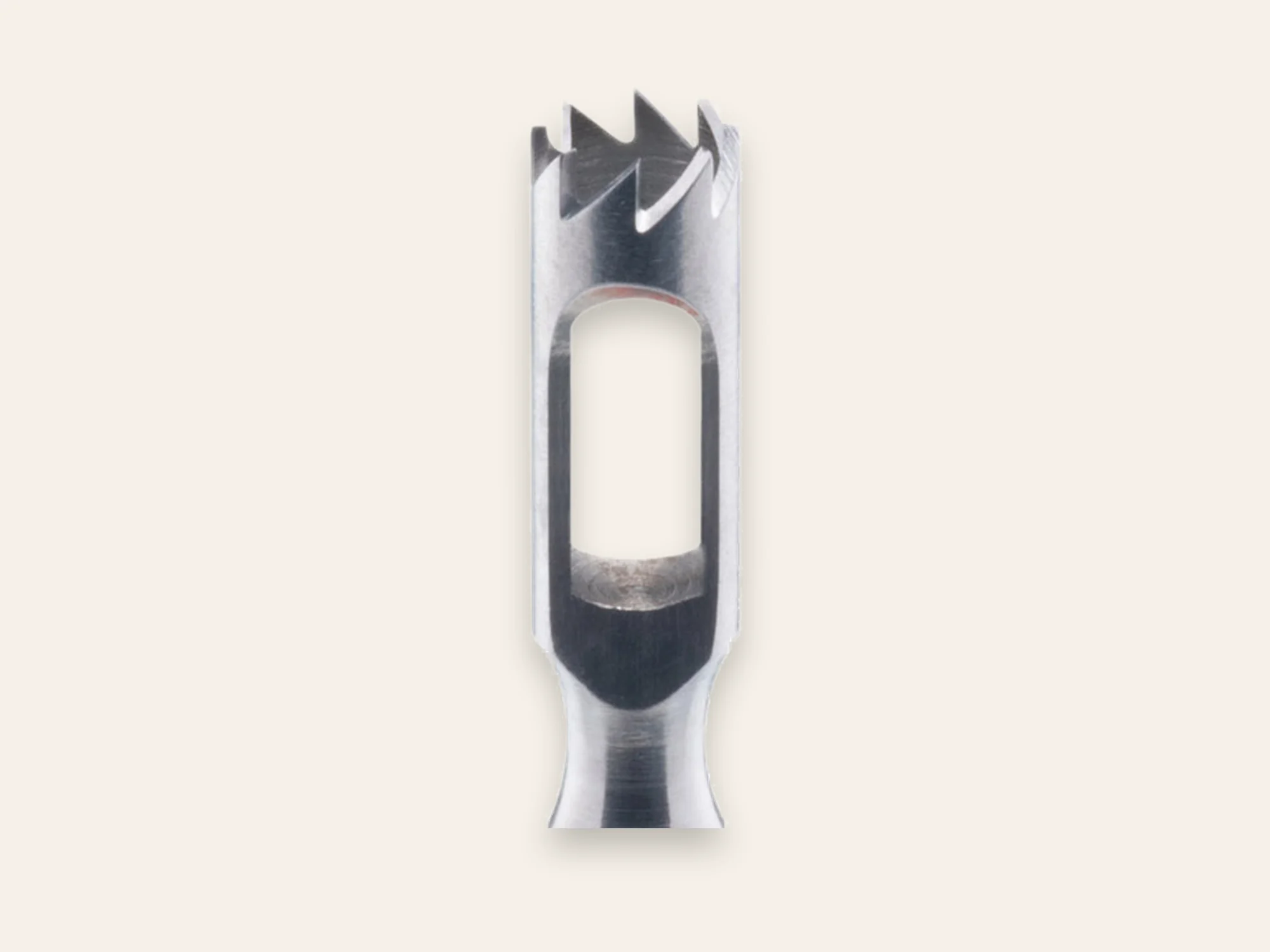
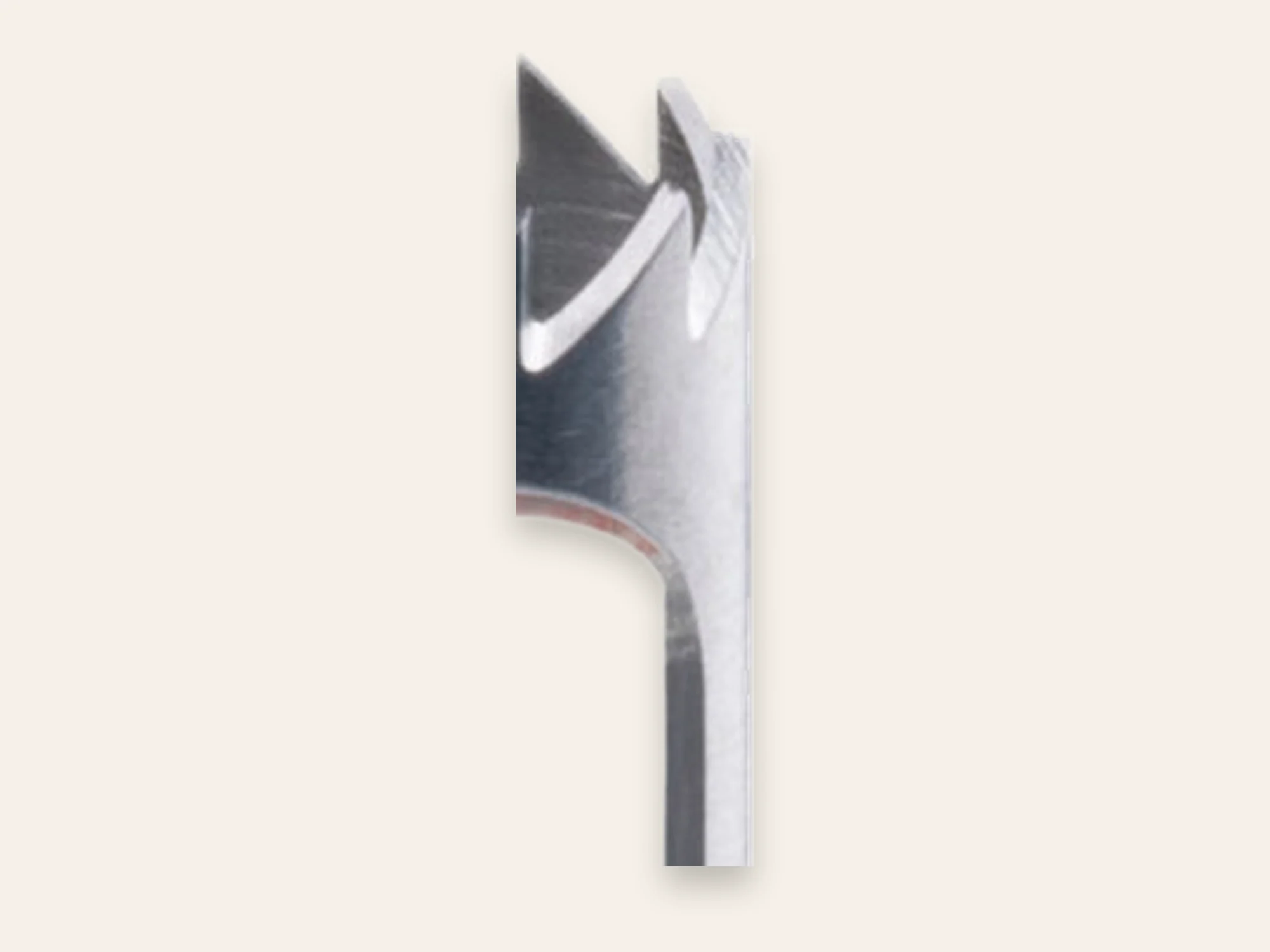
| Periungual callus | FW 01 Vacuum Crown Burr | Flat hyperkeratosis around the nail |
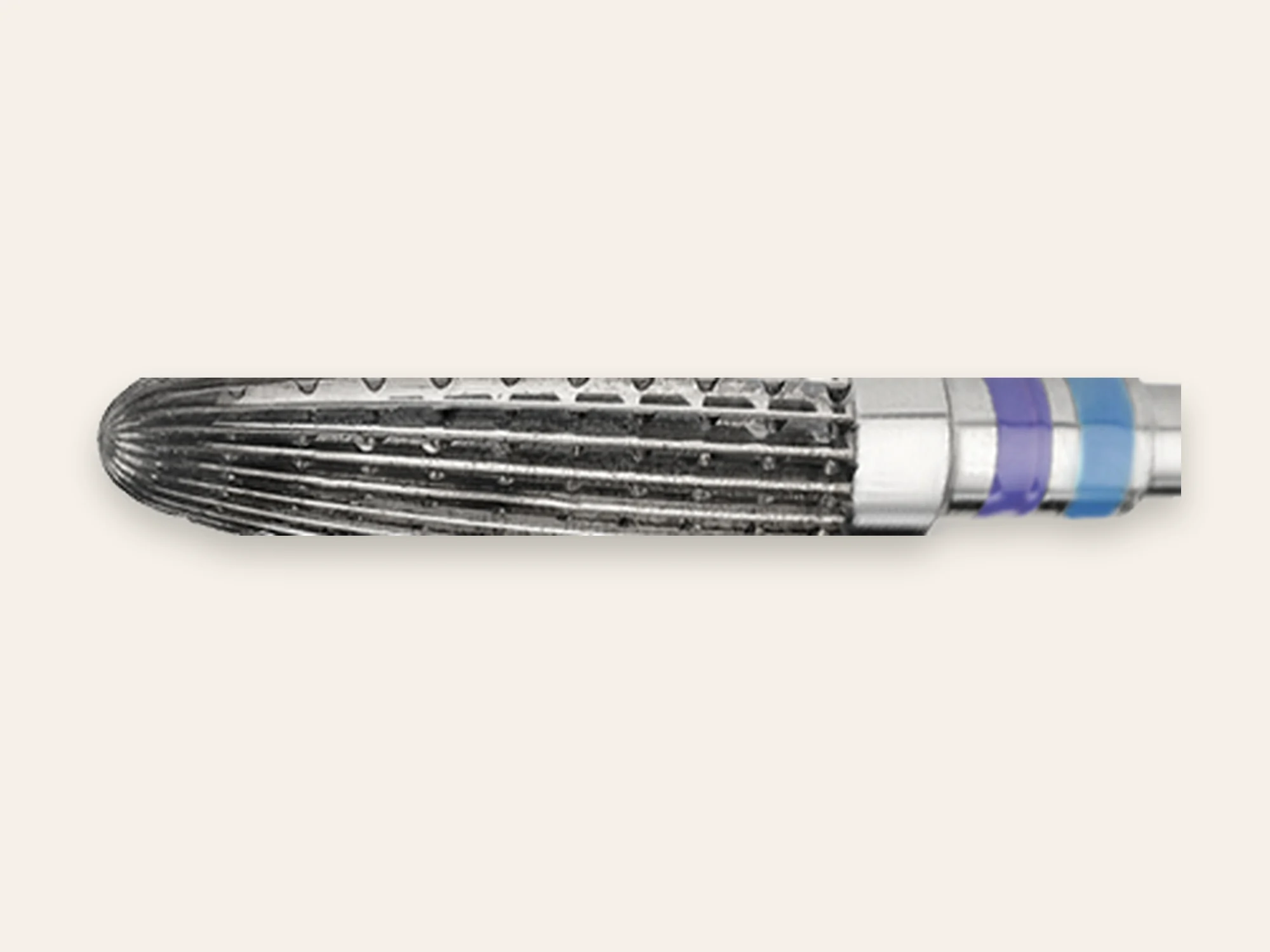
Carbide (hard metal) is the only economically sensible choice here: 5–10× longer service life than diamond, autoclavable, precise cutting flutes without heat transfer. The Carbide Burr Pro Set covers all standard applications for thickened nails.
Technique for Burring Thick Nails
Speed: 15,000–25,000 rpm for carbide coarse burrs. Not too slow — at low speed, contact pressure increases and so does heat generation.
Movement: Always in gliding strokes across the nail plate, never remain stationary. Direction of burrwork counter-clockwise (for right-handed practitioners) for cleaner removal.
Remove in layers: Do not attempt to remove the thickening in a single pass. Work in layers (0.5–1 mm each), check the clearance, continue. Target thickness: 1.5–2 mm — thin enough for comfort and shoe fit, but not so thin that the nail plate becomes fragile.
Suction: Gryphotic and mycotic nails produce considerable amounts of dust and nail powder. Work with dust extraction at the handpiece or in a separate suction housing. FFP2 respiratory protection for mycotic cases.
Indication Limits: When is Podiatric Treatment No Longer Appropriate?
- Active infection, ulceration, or necrotic tissue → refer to physician
- Diabetic foot (Wagner Grade ≥ 1) → medical podiatry / physician
- Subungual tumour or unclear pigmentation → dermatology
- Severe pain during trimming despite correct technique and adequate instrument → refer to physician
Post-Treatment Care
Following treatment of severely thickened nails, it is advisable to recommend a callus-softening care product (urea-based) for regular application to the nail plate — this reduces the rate of thickening and facilitates the next treatment.
Follow-up interval for onychogryphosis: 6–8 weeks — for geriatric patients with poor circulation, potentially shorter.